Labels

flac (326) mp3 (324) 16-bit (308) usa (293) 320kbps (233) classical (230) noise (203) jazz (121) italy (75) opera (74) modern classical (72) baroque (71) romanticism (68) chamber music (66) live (60) germany (49) classical period (46) religious (46) collaboration (44) france (43) split (43) japan (39) uk (39) england (38) industrial (37) 2007 (36) austria (36) choral (34) japanoise (32) v0 (32) drone (31) canada (29) country (29) 2018 (27) 2015 (25) 2017 (25) naxos (25) 192kbps (24) 2005 (22) dark ambient (22) nsfw (22) sweden (22) 2012 (21) denmark (21) 1992 (20) 2006 (20) 2010 (20) 2013 (20) 2003 (19) 2008 (19) 2009 (19) compilation (19) power electronics (19) 24-bit (18) folk (17) hyperion (17) 1996 (16) 2011 (16) blues (16) columbia (16) hnw (16) prestige (16) rock (16) 1956 (15) 1995 (15) john wiese (15) czechia (14) finland (14) harmonia mundi (14) russia (14) 1997 (13) art taylor (13) electroacoustic (13) johnny griffin (13) phil blankenship (13) sam mckinlay (13) the rita (13) 1993 (12) 1994 (12) 2000 (12) 2002 (12) 2004 (12) 2014 (12) 2016 (12) 2019 (12) 256kbps (12) ambient (12) harsh noise wall (12) joseph haydn (12) lieder (12) switzerland (12) 1957 (11) 1960 (11) 2001 (11) ballet (11) v2 (11) 128kbps (10) 1972 (10) 1998 (10) brad rose (10) free jazz (10) gospel (10) lhd (10) richard ramirez (10) 1973 (9) 1999 (9) jackie mclean (9) nathan young (9) nicola porpora (9) renaissance (9) 1959 (8) 1961 (8) 1976 (8) 1977 (8) 1978 (8) 1985 (8) 1987 (8) ajilvsga (8) big band (8) chandos (8) contemporary (8) dacapo (8) dave holland (8) emi classics (8) fusion (8) hampton hawes (8) kevin drumm (8) oratorio (8) othmar schoeck (8) pain jerk (8) paul chambers (8) richard wagner (8) sun ra (8) vomir (8) 1958 (7) 1967 (7) 1968 (7) 1969 (7) 1971 (7) 1974 (7) 1979 (7) 1986 (7) 1988 (7) 1989 (7) aaron dilloway (7) andreas staier (7) belgium (7) bis (7) carl nielsen (7) donald byrd (7) ecm (7) frank morgan (7) hank mobley (7) igor stravinsky (7) jack dejohnette (7) jenő jandó (7) kenny drew (7) knurl (7) macronympha (7) pop (7) rca (7) 1962 (6) 1964 (6) american primitive (6) brilliant classics (6) christoph willibald gluck (6) deutsche grammophon (6) doug watkins (6) duke ellington (6) eddie "lockjaw" davis (6) erato (6) francesco cavalli (6) giacinto scelsi (6) glossa (6) jan ladislav dussek (6) johann adolf hasse (6) johann sebastian bach (6) john gilmore (6) louis hayes (6) marc-antoine charpentier (6) norway (6) per nørgård (6) self abuse (6) self-released (6) sonny stitt (6) 1955 (5) 1963 (5) 1970 (5) 1982 (5) 1991 (5) 2020 (5) 224kbps (5) andré grétry (5) billy higgins (5) blue note (5) carl ditters von dittersdorf (5) chick corea (5) cpo (5) free folk (5) government alpha (5) incapacitants (5) maria callas (5) mikko aspa (5) moodsville (5) new jazz (5) niels-henning ørsted pedersen (5) pure (5) red garland (5) richard strauss (5) riverside (5) toshiji mikawa (5) troniks (5) vocal jazz (5) yusef lateef (5) 1951 (4) 1952 (4) 1965 (4) 1980 (4) 1981 (4) 4ib (4) alexander scriabin (4) antonio lotti (4) atlantic (4) barry harris (4) ben riley (4) blue sabbath black cheer (4) bob dylan (4) charles mingus (4) charles wuorinen (4) china (4) cracksteel (4) dan johansson (4) decca (4) deterge (4) dexter gordon (4) emil beaulieau (4) erstwhile (4) field recordings (4) franz schubert (4) freak animal (4) gene ammons (4) haare (4) hanson (4) heavy psych (4) herbert howells (4) hip-hop (4) impressionism (4) jazzland (4) jim haras (4) johan svendsen (4) jon borges (4) junior mance (4) kenny clarke (4) kenny wheeler (4) kungliga filharmonikerna (4) larry gales (4) mal waldron (4) marshall allen (4) mercury (4) miles davis (4) mosaic (4) mo・te (4) msbr (4) ominous recordings (4) orchester der bayreuther festspiele (4) orchestra del teatro alla scala (4) oslo-filharmonien (4) patrick o'neil (4) philharmonia orchestra (4) rrrecords (4) sakari oramo (4) sam jones (4) team boro tapes (4) tullio serafin (4) verve (4) vincenzo bellini (4) virgin classics (4) warner classics (4) wilhelm stenhammar (4) william shakespeare (4) 1954 (3) 1975 (3) abisko (3) airto moreira (3) alban berg (3) antonio caldara (3) balthasar-neumann-chor (3) barney kessel (3) black leather jesus (3) bootleg (3) buzz freeman (3) cedar walton (3) charlie haden (3) chess (3) chondritic sound (3) christoph prégardien (3) christophe rousset (3) cipher productions (3) cti (3) debut (3) dietrich fischer-dieskau (3) digitalis recordings (3) doom (3) dynamic (3) ecm new series (3) elmo hope (3) elvin jones (3) erik nystrand (3) estonia (3) fumio kosakai (3) genesis (3) genoasejlet (3) georg friedrich händel (3) george enescu (3) george jones (3) giacomo carissimi (3) giovanni legrenzi (3) giovanni pierluigi da palestrina (3) girolamo frescobaldi (3) glenn gould (3) grunt (3) herbie hancock (3) hospital productions (3) howard shelley (3) hungaroton (3) internazionale (3) janushoved (3) jason lescalleet (3) jean-philippe rameau (3) jim hall (3) joe farrell (3) johann baptist vanhal (3) john coltrane (3) john olson (3) johnny cash (3) julianne baird (3) kaija saariaho (3) latin (3) les arts florissants (3) les talens lyriques (3) marcia bassett (3) mario venzago (3) maurizio bianchi (3) new age (3) new forces (3) ottorino respighi (3) pain nail (3) phil collins (3) philips classics (3) philly joe jones (3) progressive rock (3) r&b (3) ray brown (3) red mitchell (3) robbie basho (3) romania (3) sam rivers (3) shelly manne (3) skin crime (3) solipsism (3) sony classical (3) spoken (3) the gift of music (3) the new blockaders (3) the parley of instruments (3) thomas hengelbrock (3) tommy flanagan (3) torturing nurse (3) tourette (3) urashima (3) vasculae (3) veljo tormis (3) walter bishop jr. (3) wardell gray (3) wiener philharmoniker (3) william christie (3) willie nelson (3) 1928 (2) 1941 (2) 1942 (2) 1948 (2) 1953 (2) 1990 (2) academy of st. martin-in-the-fields (2) alex riel (2) alfred schnittke (2) amp (2) antonio de almeida (2) anw (2) aparté (2) arcana (2) archiv produktion (2) armenia (2) art blakey (2) art farmer (2) art pepper (2) arthur phipps (2) atma classique (2) bacillus (2) bacteria field (2) balthasar-neumann-ensemble (2) benny carter (2) berliner philharmoniker (2) bill hardman (2) billie holiday (2) bizarre audio arts (2) blind lemon jefferson (2) blue mitchell (2) bob dylan & the band (2) brigitte fassbaender (2) bruno maderna (2) buell neidlinger (2) buster williams (2) camesina quartet (2) capitol (2) cecil mcbee (2) chant (2) charisma (2) charles valentin alkan (2) chris goudreau (2) claudio cavina (2) col legno (2) concord jazz (2) craig taborn (2) curtis fuller (2) das alte werk (2) david allan coe (2) deathbed tapes (2) denshi zatsuon (2) der ring (2) dial square tapes (2) dick griffin (2) document (2) dominick fernow (2) doug sides (2) droughter (2) ebm (2) edgar doneux (2) el saturn (2) electronic (2) electronica (2) epic (2) ernie farrow (2) fecalove (2) fusty cunt (2) gary bartz (2) gelsomina (2) george cables (2) george proctor (2) gerd albrecht (2) gian francesco malipiero (2) gioacchino rossini (2) giovanni maria trabaci (2) gnarled forest (2) goat (2) greh holder (2) göteborgs symfoniker (2) hank williams (2) harbinger sound (2) hard bop (2) harry partch (2) heinz holliger (2) heinz hopf (2) helicopter (2) henry purcell (2) herbert von karajan (2) hhl (2) hive mind (2) hong chulki (2) hong kong (2) hong kong philharmonic orchestra (2) hugh lawson (2) ignaz joseph pleyel (2) improvised (2) in slaughter natives (2) incidental music (2) india (2) ireland (2) island (2) jaap van zweden (2) jack rose (2) jason crumer (2) jean-baptiste lully (2) jean-joseph cassanéa de mondonville (2) jean-paul fouchécourt (2) jimmy rowles (2) jimmy woode (2) johann nepomuk hummel (2) johann pachelbel (2) johannes brahms (2) john mclaughlin (2) john neschling (2) john prine (2) john storgårds (2) josé van dam (2) julian priester (2) k2 (2) kai wessel (2) kaikhosru shapurji sorabji (2) karl böhm (2) keith brewer (2) keith jarrett (2) kenny dorham (2) la venexiana (2) lake shark harsh noise (2) legless (2) leonardo leo (2) leoš janáček (2) leroy vinnegar (2) les musiciens du louvre (2) lex humphries (2) liberty uganda (2) mania (2) marc minkowski (2) marco polo (2) mario filippeschi (2) mariss jansons (2) marjana lipošek (2) marty krystall (2) matthew gee (2) max emanuel cencic (2) mdg (2) medieval (2) michelle deyoung (2) mmb (2) mnem (2) mode (2) modern harmonic (2) monique zanetti (2) montserrat caballé (2) mother savage noise productions (2) mutant ape (2) muzio clementi (2) n. (2) new london chamber choir (2) nicola rossi-lemeni (2) nicola vinciguerra (2) nicolai gedda (2) olympisk løft (2) ondine (2) opera d'oro (2) opus arte (2) orchestra del maggio musicale fiorentino (2) orchestra of the antipodes (2) orchestra of the metropolitan opera (2) orchestre de la rtb (2) orf radio-symphonieorchester wien (2) orfeo (2) ornette coleman (2) oscar peterson (2) pan classics (2) peter holman (2) philips (2) pinchgut live (2) praga digitals (2) prairie fire (2) prurient (2) ray bryant (2) richard egarr (2) richard tucker (2) richie kamuca (2) robedoor (2) rundfunkchor leipzig (2) ryan bloomer (2) scorpio (2) scotland (2) segerhuva (2) sergio vartolo (2) sewer election (2) sharon's last party (2) she walks crooked (2) sick llama (2) skin graft (2) slaughter productions (2) slugs' saloon (2) sonny rollins (2) soul jazz (2) south korea (2) squamata (2) staatskapelle dresden (2) steeplechase (2) stefano aresi (2) stephen layton (2) steve coleman (2) stile galante (2) strata-east (2) symphonieorchester des bayerischen rundfunks (2) tapeworm tapes (2) techno (2) telarc (2) teldec (2) tetsuo furudate (2) the band (2) the basement tapes (2) the north sea (2) the young danish string quartet (2) thelonious monk (2) tommy potter (2) trash ritual (2) treriksröset (2) tribute (2) troum (2) two assistant deputy ministers (2) tzadik (2) v1 (2) vanguard (2) vanity productions (2) varg (2) werewolf jerusalem (2) white gold (2) wilbur ware (2) wolfgang amadeus mozart (2) worthless recordings (2) wynton kelly (2) xerxes (2) yazoo (2) zaïmph (2) zwangsbelgucktertum (2) âmes sanglantes (2) 16 shots per second (1) 160kbps (1) 1917 (1) 1926 (1) 1927 (1) 1929 (1) 1930 (1) 1931 (1) 1933 (1) 1935 (1) 1936 (1) 1937 (1) 1940 (1) 1943 (1) 1947 (1) 1950 (1) 1966 (1) 1983 (1) 1984 (1) 23 productions (1) 26 volts of danger recordings (1) a raja's mesh men (1) a&m (1) a.l. lloyd (1) a.z.a.b. (1) aam (1) abandon ship (1) academy of ancient music (1) accord (1) adam riis (1) addison farmer (1) adriano (1) adriano maria fazio (1) adrienne soós (1) agnes baltsa (1) agression sonore (1) alain lombard (1) alan curtis (1) alan feinberg (1) albany (1) albert ammons (1) albert ayler (1) albert heath (1) alchemy (1) aleksandar nenad (1) alexander weimann (1) alexei lubimov (1) alfarmania (1) allyson mchardy (1) alms (1) alpha classics (1) amandine beyer (1) ambrosian opera chorus (1) american composers orchestra (1) american tapes (1) amos trice (1) an innocent young throat-cutter (1) anarchofreaksproduction (1) andrea coen (1) andrea stadel (1) andreas karasiak (1) andrew goodwin (1) andris nelsons (1) andrius zlabys (1) andré anichanov (1) angst (1) anna moffo (1) anna tomowa-sintow (1) annette dasch (1) annette krebs (1) anselmo colzani (1) anssi karttunen (1) antal dorati (1) anthony korf (1) anthony walker (1) antilles (1) antoine brumel (1) antonino votto (1) antonio de cabazón (1) antonio figueroa (1) antonio salieri (1) antonín dvořák (1) apple (1) aradia ensemble (1) arianna art ensemble (1) arion (1) arkiv produktion (1) arne deforce (1) arnold schönberg (1) ars produktion (1) art konkret (1) art yard (1) arthur honegger (1) artifizii musicali (1) artists house (1) artur bodanzky (1) ash international (1) asylum (1) atma baroque (1) aube (1) audiobot (1) aurora orchestra (1) auser musici (1) australia (1) autrement qu'être (1) avanti! chamber orchestra (1) avery sharpe (1) axel kober (1) backasvinet (1) barbatos productions (1) barrikad (1) bascom lamar lunsford (1) bastiaan blomhert (1) batzdorfer hofkapelle (1) bayer (1) bbc legends (1) bbc philharmonic (1) bbc scottish symphony orchestra (1) bbc symphony orchestra (1) benjamin britten (1) bennie maupin (1) benny bailey (1) berlin classics (1) berliner symphoniker (1) bernard deletré (1) berner symphonieorchester (1) big bill broonzy (1) big hole (1) bill connors (1) bill evans (1) billy cobham (1) billy osbourne (1) billy strayhorn (1) birth refusal (1) bizarre uproar (1) bjarte engeset (1) black lion (1) black matter phantasm (1) black ring rituals (1) black saint (1) blind blake (1) blind boy fuller (1) blind willie johnson (1) blind willie mctell (1) blod (1) blossoming noise (1) blue cheer (1) bluebird (1) boaz sharon (1) bocksholm (1) bohdan warchal (1) bongiovanni (1) br-klassik (1) bradíc (1) breathing problem (1) breathing problem productions (1) brenton banks (1) brewer chamber orchestra (1) brise-cul (1) broken flag (1) bruno cocset (1) bruno gini (1) bruno procopio (1) bud powell (1) budapesti madrigálkórus (1) buddah (1) buddy montgomery (1) c. lavender (1) c.l. smooth (1) cajun (1) caligula031 (1) call cobbs jr. (1) callow god (1) camerata bern (1) camerata schweiz (1) camilla nylund (1) canary (1) cantillation (1) cantus classics (1) cappella coloniensis (1) cappella musicale pontificia sistina (1) capriccio (1) caprice (1) carl heinrich graun (1) carl smith (1) carlo ipata (1) carlos giffoni (1) carnegie melon philharmonic (1) carus (1) catherine bott (1) celeste lazarenko (1) celluloid murder (1) centaur (1) chaconne (1) challenge classics (1) chamber orchestra i tempi (1) charles gounod (1) charles koechlin (1) charles moffett (1) charles tolliver (1) charlie persip (1) charlie rice (1) charlie rich (1) chloroform rapist (1) choeur de chambre de namur (1) choir of aam (1) choir of trinity college cambridge (1) chris laurence (1) christian gerhaher (1) christian nicolay (1) christian stadsgaard (1) christiane eda-pierre (1) christoph croisé (1) christophe dumaux (1) christopher jackson (1) christopher moulds (1) christopher robson (1) christophorus (1) chœurs de la rtb (1) cinquecento (1) city of london sinfonia (1) clarius audi (1) clark terry (1) claudette leblanc (1) claves (1) clef (1) clifford jordan (1) cloama (1) cold meat industry (1) come organisation (1) complesso pro musica firenze (1) composers recordings inc. (1) concentus vocalis (1) concerto köln (1) concerto vocale (1) concrete mascara (1) condo horro (1) connie kay (1) consortium carissimi (1) contagious orgasm (1) conte candoli (1) conway twitty (1) cori spezzati (1) coro claudio monteverdi (1) coro della radiotelevisione svizzera (1) crd (1) cremation lily (1) crimes of the crown (1) cruel nature (1) curtis lundy (1) cyclic law (1) d.a.c. (1) daniel sepec (1) daniel szeili (1) daniela dolci (1) danilo serraiocco (1) dannie richmond (1) danny ray thompson (1) dante quartet (1) dare2 (1) dave frishberg (1) david adams (1) david bates (1) david izenzon (1) dawn upshaw (1) dead birds (1) dead body collection (1) deadline recordings (1) death industrial (1) desolation house (1) deutsche kammerakademie (1) deutsches symphonie-orchester berlin (1) diana montague (1) diego fasolis (1) dieter klöcker (1) dino valente (1) discipline (1) disques pierre verany (1) dizzy gillespie (1) dizzy reece (1) dj premier (1) dmitri shostakovich (1) doc bagby (1) dolce & tempesta (1) don alias (1) don byas (1) don cherry (1) don gibson (1) don patterson (1) donald bailey (1) dorian keilhack (1) dorothee oberlinger (1) dosis letalis (1) double leopards (1) douglas ahlstedt (1) dr koncertkoret (1) dr vokalensemblet (1) dresdner kapellknaben (1) drew minter (1) dried up corpse (1) drinkluder (1) duke jordan (1) dusa (1) dust-to-digital (1) dwight yoakam (1) ebe stignani (1) eberhard weber (1) ebony-duo (1) eckhart hübner (1) eclipse (1) ed lyon (1) eddie gale (1) eddie gomez (1) edgard varèse (1) editions de l'oiseau lyre (1) editions mego (1) edvard grieg (1) edward brewer (1) edward vesala (1) eesti filharmoonia kammerkoor (1) einojuhani rautavaara (1) eje thelin (1) elbogen fonogram (1) eleczema (1) elektra (1) elena cecchi fedi (1) elisabeth rethberg (1) elisabeth schwarzkopf (1) elizabeth calleo (1) elizabeth farnum (1) elsa benoit (1) elvis presley (1) emaciator (1) emeralds (1) emil richards (1) emiliano gonzalez toro (1) emmanuel pahud (1) emmylou harris (1) endymion ensemble (1) enemata productions (1) english bach festival baroque orchestra (1) ensemble elyma (1) ensemble für frühe musik augsburg (1) ensemble la pifarescha (1) ensemble legrenzi (1) ensemble modern orchestra (1) ensemble olivier opdebeeck (1) ensemble seicentonovecento (1) ensemble vocal françoise herr (1) epoca baroca (1) erasmo ghiglia (1) erdódy chamber orchestra (1) eric harland (1) erin headley (1) erin helyard (1) ernst ottensamer (1) esa-pekka salonen (1) esp-disk (1) et'cetera (1) ethnic (1) evan parker (1) evelyn lear (1) evgeny kissin (1) evil moisture (1) ewan maccoll (1) experiments in american music (1) fabienne jost (1) fag tapes (1) failing lights (1) failoni orchestra (1) fall into void recs (1) fausto cleva (1) fedora barbieri (1) ferenc szekeres (1) ffrr (1) filippo piccolo (1) fingering eve (1) finlandia (1) flatline construct (1) flavio colusso (1) fonation orange (1) forced orgasm (1) fort evil fruit (1) francesco albanese (1) francesco cera (1) franck-emmanuel comte (1) franco fagioli (1) francy boland (1) franz berwald (1) franz schuber (1) françois devienne (1) françois-xavier roth (1) freckle (1) fred jordan (1) fred neil (1) freddie waits (1) frederico maria sardelli (1) fredrik malmberg (1) freiburger barockorchester (1) fresh sound (1) friedrich schorr (1) frits celis (1) fromental halévy (1) frédéric chopin (1) fuga libera (1) further (1) g.t. hogan (1) gabriel garrido (1) galactique (1) gambit (1) gameboy (1) gary bertini (1) gary cooper (1) gaudeamus (1) gennady rozhdestvensky (1) genuin (1) georg philipp telemann (1) george joyner (1) george onslow (1) george wadenius (1) george zeppenfeld (1) gerald finzi (1) gerhard müller-hornbach (1) gevorg gharabekyan (1) gianandrea noseda (1) gidon kremer (1) gil coggins (1) gil scott-heron (1) gilles de rais order (1) giovanni battista costanzi (1) giovanni guglielmo (1) giovanni sollima (1) gipsy sphinx (1) giuseppe di stefano (1) giuseppe modesti (1) giuseppe valengo (1) giuseppe verdi (1) giuseppina bridelli (1) gli incogniti (1) glistening examples (1) gnp (1) goaty tapes (1) golden years of new jazz (1) gomikawa fumio (1) gordon wilson ashworth (1) gould piano trio (1) graham pushee (1) grant green (1) great opera performances (1) gremlynz (1) grkzgl (1) guild (1) guilty connector (1) gun-brit barkmin (1) gunnar graarud (1) guy clark (1) guy delvaux (1) gächinger kantorei stuttgart (1) gérard lesne (1) hadleigh adams (1) hal hutchinson (1) hanged mans orgasm (1) hank jones (1) hans hotter (1) hans-christoph rademann (1) hanspeter gmür (1) harald stamm (1) harold land (1) harry edison (1) harry james (1) harshnoise (1) hat art (1) heavy tapes (1) hebi like a snake (1) helen humes (1) helene gjerris (1) helga dernesch (1) helios (1) helmut walcha (1) henning voss (1) henry grimes (1) herb ellis (1) herbert kegel (1) herbie lewis (1) heretic grail (1) hermann wright (1) hervé niquet (1) hidemi suzuki (1) highnote (1) hilton ruiz (1) hologram label (1) holst singers (1) horace arnold (1) horace parlan (1) horace silver (1) howard griffiths (1) howard mcghee (1) howlin' wolf (1) hubert laws (1) hubert wild (1) huff raid robot (1) hugh ragin (1) hugh schick (1) human larvae (1) hungary (1) håkan hagegård (1) ian partridge (1) iatrogenesis (1) ideal recordings (1) ides recordings (1) idiopathic (1) idris muhammad (1) iestyn davies (1) igor markevitch (1) ike turner (1) il complesso barocco (1) il fondamento (1) il pomo d'oro (1) ilan volkov (1) impregnable (1) impulse! (1) inhalant (1) inhos (1) inner city (1) innova recordings (1) institut (1) institute of paraphilia studies (1) interior one (1) irmgard seefried (1) isabelle van keulen (1) israel (1) istván várdai (1) ivo haag (1) ivor gurney (1) j.j. johnson (1) jaakko vanhala (1) jack sheldon (1) jaco pastorius (1) jaki byard (1) jamaica (1) james blackshaw (1) james ehnes (1) james lockhart (1) james wood (1) jan dismas zelenka (1) jan garbarek (1) jane getz (1) jaribu shihad (1) jarl (1) jaro prohaska (1) jason "evil" covelli (1) jazz:west (1) jean-françois gardeil (1) jean-françois jenny-clark (1) jean-jacques rousseau (1) jeff witscher (1) jeffrey thompson (1) jeru the damaja (1) jessye norman (1) jetset (1) jimmy bond (1) jimmy forrest (1) jimmy heath (1) jimmy yancey (1) joe gordon (1) joe guy (1) joe henderson (1) joe mondragon (1) joe pass (1) joe turner (1) joe zawinul (1) johannes goritzki (1) johannes kalitzke (1) johannes wildner (1) john bull (1) john eliot gardiner (1) john fahey (1) john handy (1) john kurnick (1) john ore (1) john parricelli (1) john simmons (1) john taylor (1) john witfield (1) jon christensen (1) joni mitchell (1) josef greindl (1) joseph robichaux (1) josé carreras (1) joyce didonato (1) juan pablo izquierdo (1) judith bettina (1) judith bingham (1) judith pannill (1) jukka tiensuu (1) jukka-pekka saraste (1) julia varady (1) june anderson (1) june tyson (1) järtecknet (1) jérôme corres (1) jörg waschinski (1) jürg henneberger (1) k2b2 (1) kadaver (1) kakerlak (1) kammerchor heidelburg (1) kaos kontrol (1) karen dalton (1) karin branzell (1) karl elmendorff (1) karl engel (1) karl schmidt verlag (1) katarina (1) kathryn scott (1) kein & aber (1) kenny barron (1) kenny burrell (1) kenny dennis (1) kent nagano (1) keranen (1) keränen (1) kevin eubanks (1) kickacid (1) kikanju baku (1) kim kashkashian (1) kinky music institute (1) kiri te kanawa (1) kirill gerstein (1) kirill kondrashin (1) klanggalerie (1) klaus florian vogt (1) klaus merterns (1) knabenchantorei basel (1) konrad wagner (1) koryphaia (1) krautrock (1) kremerata baltica (1) kris kristofferson (1) kurt eichhorn (1) la nuova musica (1) la stagione armonica (1) larry bunker (1) last rape (1) laura heimes (1) lawo classics (1) lawrence marable (1) le concert de l'hostel dieu (1) le concert spirituel (1) le nouvel opéra (1) lee konitz (1) lee morgan (1) leibstandarte ss mb (1) leo (1) leonardo vinci (1) lera auerbach (1) leroy williams (1) les basses réunies (1) les disques du soleil et de l'acier (1) les paladins (1) less than zero (1) lew tabackin (1) lewis nash (1) liberty (1) linda mccartney (1) linda perillo (1) lionel hampton (1) lionel rogg (1) liszt ferenc kamarazenekar (1) lloyd mayers (1) london mozart players (1) london sinfonietta (1) london symphony orchestra (1) lone star (1) lorenzo coppola (1) lorraine hunt (1) lost light (1) love earth music (1) lucine amara (1) ludwig august lebrun (1) luigi dallapiccola (1) luke huisman (1) luqman ali (1) lusine zakaryan (1) luzzasco luzzaschi (1) lyrichord (1) m4a (1) mackenzie chami (1) mads vinding (1) mady mesplé (1) mahan esfahani (1) maim (1) mainstream (1) makoto akatsu (1) malcolm proud (1) malcolm stewart (1) mara zampieri (1) marc-andré hamelin (1) marcello lippi (1) marco deplano (1) marcus creed (1) margaret kampmeier (1) margrit weber (1) marguerite krull (1) maria bayo (1) maria müller (1) marianne schroeder (1) marie-adeline henry (1) marin alsop (1) mark durgan (1) mark kozelek (1) mark padmore (1) martial solal (1) martin france (1) martin gabriel (1) martin haselböck (1) martin sturfält (1) martyn hill (1) marvin "smitty" smith (1) maría bayo (1) mass ornament (1) massimo palombella (1) masumi nagasawa (1) mats widlund (1) matthias goerne (1) matthias jung (1) max lorenz (1) maxim emelyanychev (1) mccoy tyner (1) meade "lux" lewis (1) medusa (1) melodiya (1) menstrualrecordings (1) merle haggard (1) merzbow (1) metal (1) mgb (1) michael mcdonald (1) michel plasson (1) michèle dévérité (1) miisc (1) mike connelly (1) mike mainieri (1) milestone (1) military (1) misanthropic agenda (1) mlehst (1) moisture discipline (1) mondo musica (1) monica bacelli (1) monica piccinini (1) monika leskovar (1) monk montgomery (1) monteverdi choir (1) moscow philharmonic orchestra (1) moscow symphony orchestra (1) motette (1) mps (1) msi (1) muse (1) musica alta ripa (1) musica fiorita (1) musica omnia (1) mutare ensemble (1) muzikaal kabaal (1) myto (1) münchner rundfunkorchester (1) nancy hadden (1) nanny larsen-todsen (1) nat adderley (1) ncfo (1) near passerine devotionals (1) nectroik fissure (1) neeme järvi (1) neil varon (1) nepomuk fortepiano quintet (1) netherlands (1) neville marriner (1) new brutalism (1) new chamber opera (1) new world (1) newport classic (1) nfw (1) nicholas mcgegan (1) nick drake (1) nicola fiorenza (1) nicola monti (1) niellerade fallibilisthorstar (1) nigel short (1) nihilist commando (1) nikolai myaskovsky (1) nino sanzogno (1) no fun productions (1) no rent (1) nonesuch (1) norfolk trotter (1) norman simmons (1) novus (1) nuovo era (1) nurse etiquette (1) objective/subjective (1) ochu (1) octa (1) okeh (1) olaf bär (1) old hat (1) ole kristian ruud (1) oliver knussen (1) olivier messiaen (1) olivier opdebeeck (1) onzy matthews (1) opera lafayette orchestra (1) opus 111 (1) orchester der deutschen oper berlin (1) orchestra 'van wasenaer' (1) orchestra del teatro la fenice (1) orchestra di milano della rai (1) orchestra leonardo leo (1) orchestre de l'opéra de lyon (1) orchestre de l'opéra de paris (1) orchestre de louis de froment (1) orchestre du capitole de toulouse (1) orchestre philharmonique de monte-carlo (1) orchestre philharmonique de strasbourg (1) orchestre philharmonique royal de liège (1) organ (1) orquestra sinfônica do estado de são paulo (1) oscillating innards (1) oslo philharmonic wind soloists (1) otoroku (1) oubliette (1) p-tapes (1) p.e. (1) pablo bruna (1) pacrec (1) panta rhei (1) parnassus ensemble (1) parnasus symphonicus (1) patrice djerejian (1) patricia johnson (1) patricia petibon (1) patricia spence (1) patrizia zanardi (1) patsy cline (1) paul bryant (1) paul dombrecht (1) paul mccartney (1) paul motian (1) pauline vaillancourt (1) pavel kolesnikov (1) payday (1) peasant magik (1) pedro de araujo (1) peking crash team (1) pekka perä-takala (1) pelt (1) pentatone (1) percussive rotterdam (1) percy heath (1) perpetual abjection (1) pete johnson (1) pete rock (1) pete rock & c.l. smooth (1) peter erskine (1) peter gabriel (1) peter jablonski (1) peter reichert (1) peter rundel (1) peter watchorn (1) philharmonische werkstatt schweiz (1) philippe jaroussky (1) philippe pierlot (1) philly jazz (1) phurpa (1) piano classics (1) pietro bosna (1) plácido domingo (1) poland (1) pollutive static (1) polydor (1) porn noise (1) portugal (1) praxis dr. bearmann (1) propergol (1) propulsive audio (1) puce mary (1) puerto rico (1) putrefier (1) párkányí quartet (1) péter szabó (1) quack quack (1) quatuor molinari (1) radio sinfoniaorkesteri (1) ralph moore (1) ralph vaughan williams (1) rap-a-lot (1) raubbau (1) ray draper (1) ray drummond (1) red callender (1) redsk (1) reggae (1) reinhold gliere (1) renata rusche (1) rene maison (1) rené jacobs (1) reprise (1) rev. gary davis (1) rias kammerchor (1) ricercar (1) ricercar consort (1) richard hickox (1) richard russell (1) richard williams (1) rinaldo alessandrini (1) rita coolidge (1) rita streich (1) robert craft (1) robert crumb (1) robert kerns (1) robin johannsen (1) rodney crowell (1) rodney kendrick (1) roel dieltiens (1) rogueart (1) roland bufkens (1) roland hanna (1) rolando panerai (1) romantcism (1) romina basso (1) ron carter (1) roost (1) rosamunde quartett (1) roscoe mitchell (1) rossella ragatzu (1) roy goodman (1) roy hargrove (1) roy haynes (1) royal liverpool philharmonic orchestra (1) royal scottish national orchestra (1) rrr (1) rudolf schock (1) rudolph palmer (1) ruggero leoncavallo (1) rundfunk-sinfonieorchester leipzig (1) rundfunkchor berlin (1) russ freeman (1) ryan brown (1) ryu hankil (1) sabine meyer (1) sacred harp (1) sahib shihab (1) sam larner (1) samuel barber (1) sandra arnold (1) sarah makem (1) satan's din (1) saturn research (1) saverio mercadante (1) savoy (1) schakalens bror (1) scott lafaro (1) scum yr earth (1) sebastian tewinkel (1) sebatián aguilera de heredia (1) seicento (1) seiji ozawa (1) serbia (1) serge baudo (1) sergey pakhomov (1) seven sermones ad mortuos (1) sharon quartet (1) sharpwaist (1) sick seed (1) siege electronics (1) signum classics (1) simon joy chorale (1) simon keenlyside (1) simon rattle (1) sinner lady gloria (1) sissisters (1) sixes (1) skeleton dust recordings (1) skin area (1) skip james (1) slave chandelier (1) slide hampton (1) slovenský komorný orchester (1) snuff (1) solid state (1) soloists of the cappella musicale di s. petronio di bologna (1) sonia prina (1) sonnenrad (1) sonny clark (1) sophie bevan (1) soul (1) soul note (1) sound & fury (1) soup (1) spain (1) spine scavenger (1) spite (1) spykes (1) st. petersburg state symphony orchestra (1) staatsorchester rheinische philharmonie (1) stadttheater bern (1) stan sulzamnn (1) stanley clarke (1) stanley cowell (1) steel hook prostheses (1) stefan parkman (1) stefan östersjo (1) stefano demicheli (1) steffen kubach (1) stegm (1) stenhammar quartet (1) stepan turnovsky (1) stephanie mccallum (1) stephen alltop (1) stephen hough (1) stephen rice (1) sterile (1) steve earle (1) steve ellington (1) steve goodman (1) steve osborne (1) stimbox (1) strict (1) studio de musique ancienne de montréal (1) sun kil moon (1) sunny murray (1) support unit (1) survivalist (1) suzie leblanc (1) swampland (1) symonický orchester slovenského rozhlasu (1) symphonieorchester des orf (1) symphony orchestra of vlaamse opera (1) synthpop (1) s·core (1) sächsisches vocalensemble (1) sønderjyllands symfoniorkester (1) südwestdeutsches kammerorchester pforzheim (1) takoma (1) taku unami (1) tall poppies (1) tani tabbal (1) tape room (1) tape tektoniks (1) tapiolan kamarikuoro (1) taskmaster (1) teddy charles (1) teddy stewart (1) teddy wilson (1) tenebrae (1) tension collapse (1) terror cell unit (1) the brabant ensemble (1) the cherry point (1) the copper family (1) the doobie brothers (1) the king's consort (1) the level of vulnerability (1) the london haydn quartet (1) the percussive planet ensemble (1) the queen's chamber band (1) the voice of the people (1) the vomit arsonist (1) theo adam (1) theorema (1) thomas arne (1) thomas füri (1) thomas hayward (1) thrill jockey (1) tibet (1) tibetan monks (1) tim frederiksen (1) tim hardin (1) tito gobbi (1) tom krause (1) tom t. hall (1) tom van der geld (1) tom waits (1) tommy bryant (1) tony dumas (1) topic (1) torsten kerl (1) toshiko akiyoshi (1) total black (1) total zero (1) tower voices new zealand (1) tradition (1) train cemetery (1) transition (1) transparency (1) trashfuck (1) trauma tone recordings (1) triangle (1) troglosound (1) trojan (1) trondheim symfoniorkester (1) troubleman unlimited (1) trudelise schimdt (1) trummy young (1) turgid animal (1) turkey (1) tyshawn sorey (1) tõnu kaljuste (1) tøke moldrup (1) ukraine (1) ulf bästlein (1) ulf schirmer (1) uncle dave macon (1) unclean (1) united artists (1) united forces of industrial (1) utmarken (1) utsu tapes (1) uwe grodd (1) uzusounds (1) vadym kholodenko (1) valois (1) vanguard productions (1) vasily petrenko (1) vee-jay (1) venezuela (1) vern gosdin (1) vernon handley (1) verve forecast (1) vhf (1) victor sproles (1) vienna mozart academy (1) vinnie colaiuta (1) visions (1) vito paternoster (1) vivat (1) vms (1) vms elit (1) vogue schallplatten (1) vokalensemble nova (1) vårtgård (1) véronique gens (1) wagon (1) wall noise action (1) walter davis jr. (1) waltraud meier (1) warner bros. (1) washington phillips (1) wav (1) wayne shorter (1) wdr (1) wdr sinfonieorchester köln (1) webb pierce (1) webster young (1) wendy warner (1) werner haselau (1) wes montgomery (1) what we do is secret (1) wiener akademi (1) wiener kammerchor (1) wiener staatsopernorchester (1) wil bill davis (1) wilhelm furtwängler (1) william bennett (1) william winant (1) willie dixon (1) willie johnson (1) willie jones (1) windham hill (1) woody shaw (1) workbench (1) workturm ghetto (1) woven skull (1) xl recordings (1) yevgeny mravinsky (1) young god (1) z-ro (1) zabelle panosia (1) zombi attack (1) zyklon ss (1) åke hodell (1) åke persson (1) æon (1)
Showing posts with label 16-bit. Show all posts

Monday, 22 February 2021

Roscoe Mitchell - Bells for the South Side


“In the midst of the historic events surrounding the 50th anniversary of the Association for the Advancement of Creative Musicians (AACM), I wanted to highlight my explorations into new artistic territory, as represented by the series of trio project showcased in this recording.

“I began work on these trios when Jeff Gauthier and Alex Cline contacted me to say they wanted to honor me for my 71st birthday and 45th anniversary of AACM by inviting me to be a part of Angel City Festive 2011. Alex Cline wanted to do an arrangement of my composition ‘People in Sorrow’ (‘For People in Sorrow: an Homage’ by Alex Cline for a twelve-piece ensemble with Will Salmon conducting). For the same occasion I decided to write a composition, titled ‘Angel City’, for my first trio. Trio number one consists of two of my colleagues at Mills College, James Fei and William Winant, and myself. ‘Angel City’ was premiered at the REDCAT Theater on Sunday, October 2, 2011, Los Angeles, California.

“The second trio was formed after a friend and local supporter of new music, Harry Bernstein, called me to mention that Tyshawn Sorey was playing a solo concert at his home and asked me if I would and play a piece with Tyshawn at this concert. This was my first time meeting Tyshawn Sorey, and I found him to be an amazing musician. After that performance I had an opportunity to do some more music with Tyshawn Sorey and decided to add Hugh Ragin, a musician I’ve worked with since the mid-1970s, who I met when I was giving a workshop at the Creative Music Foundation in Woodstock, New York. This occasion led to the formation of the second trio.

“The third trio formed when I was scheduled to play at the Café Oto in London. A bold young London drummer named Kikanju Baku wrote me an email saying he wanted to play with me and sent me some of his music to listen to. I was very impressed with the music he sent me, and on the second night of my performance at Café Oto I invited him to sit in with the trio of John Edwards, Tani Tabbal, and myself. I’ve worked with Craig Taborn since the late 1990s. He has been a member of several of my bands and is a musician of the highest caliber. Putting these musicians together resulted in the formation of trio three.

“The fourth trio features two musicians I have had the pleasure of working with since the mid-1970s, Tani Tabbal and Jaribu Shahid. They were members of the Sound Ensemble, the first groups I established outside of the Art Ensemble of Chicago after returning to the United States from Europe in the early 1970s. They are also founding members of the Creative Arts Collective (CAC), the musicians’ collective I founded modeled on the Association for the Advancement of Creative Musicians (AACM). To me, it was always a given that Tani and Jaribu would be my fourth trio for the performances at the Museum of Contemporary Art.” (Roscoe Mitchell. From the liner notes.)

Performers: Roscoe Mitchell (si/s/a/bs-sx/fl/pl/b-recorder/pc), Hugh Ragin (tp/p-tp), Tyshawn Sorey (tb/pi/dr/pc), James Fey (si/a-sx/ca-cl/electronics), Craig Taborn (pi/og/electronics), Jaribu Shihad (bs/bs-gt/pc), Kikanju Baku/Tani Tabbal (dr/pc), William Winant (pc/tubular bells/glockenspiel/vb/mb/rototoms/cymbal/bs drum/wood block/timpani)

1. Spatial Aspects Of The Sound
2. Panoply
3. Prelude To A Rose
4. Dancing In The Canyon
5. EP 7849
6. Bells For The South Side
7. Prelude To The Card Game, Cards For Drums, And The Final Hand
8. The Last Chord
9. Six Gongs And Two Woodblocks
10. R509A Twenty B
11. Red Moon In The Sky/Odwalla

Monday, 8 February 2021

Johnny Griffin - The Man I Love


“Critic Ralph J. Gleason made an oft-quoted remark about Johnny Griffin during the course of a 1958 ‘Down Beat’ record review. To avoid any misunderstandings this is Gleason’s paragraph, in full: ‘Unquestionably Johnny Griffin can play the tenor saxophone faster, literally, than anyone alive. At least he can claim this until it’s demonstrated otherwise. And in the course of playing with this incredible speed, he also manages to blow longer without refueling than you would ordinarily consider possible. With this equipment he is able to play almost all there could possibly be played in any given chorus.’

“As far as it goes Gleeson’s words are probably correct. (In the absence of a jazz section to the Guinness Book of Records we must assume Griffin’s leading position in the field of runners in the Semi-Quaver Race.) But it would be wrong to assume that John Arnold Griffin III was nothing more than a note-producing machine fitted with a control graduated from ‘Finished with Engines’ up to ‘Full Speed Ahead’. He is an amazingly consistent soloist, a man who is never off from by all accounts; undeniably he likes fast tempos but is a complete, rounded jazz musician, capable of tackling any material with the aid (or something otherwise!) of any rhythm section. Since he came to Europe in 1962, at the age of 34, he has been giving free lessons on the gentle arts of relaxation, saxophone technique, deep-seated emotional intensity and a host of other important elements to thousands of listeners in Paris, London, Copenhagen and other centres where jazz is appreciated.

“When John left the United States he seemed already to have achieved more than many jazzmen achieve in a lifetime. He was 16 when he joined Lionel Hampton’s band as an alto saxophonist. (At least Griffin thought he had been booked to play alto in the reed section. On his first date with the band he took out the smaller horn only to be asked the whereabouts of his tenor. He dashed back home to Chicago at the earliest opportunity laid hands on a tenor and rejoined Hamp’s reed section which contained such stalwarts as Arnett Cobb, Bobby Plater and Charlie Fowlkes.) When Joe Morris, one of Hamp’s trumpeters, left to form his own band in 1947 John went with him and stayed with Morris for three years. (Morris’s lively little rhythm-and-blues band had a rhythm section comprising Elmo Hope, Percy Heath and Philly Joe Jones for a time.)

“Apart from a handful of relatively short engagements with other bands (Arnett Cobb’s unit in 1951, Art Blakey’s Jazz Messengers from March to October 1957 and the Thelonious Monk Quartet during the summer of 1958) Griffin has been a solo artist or band leader since leaving the Joe Morris band. When I spoke to him during one of his bookings at the Ronnie Scott Club during the late sixties he seemed content to be touring the European jazz centres, secure in the knowledge that he would find a suitable rhythm section for his engagements. (He also spoke of the Johnny Morris band with pride, listed the names of the men who had passed through its ranks and gave me the news that Morris had died a few years earlier.) But I suspect that his appearances at the Montmartre Jazzhuis in Copenhagen during 1967 must have given him particular pleasure. The rhythm section contained two other expatriate Americans, friends of Johnny who had worked and recorded with him back home. Pianist Kenny Drew, a direct contemporary of Griffin, came to Europe from New York City in 1962 while Al Heath brother of bass player Percy and saxophonist Jimmy, lived in Europe between 1965 and 1968. The bass player, Nils Henning Ørsted-Pedersen, is of course the world-class Danish jazzman who has worked with every visiting American and was a member of the Oscar Peterson Trio for a time.

“The LP contains music which is wholly typical of a Johnny Griffin set, rich in blues either actual (such as ‘Blues for Harvey’) or as an overlying mood (Duke’s lovely ‘Sophisticated Lady’, painted here in varying shades of azure). Despite the different instruments Griffin’s most obvious influence must be Charlie Parker and if one plays parts of the LP at the incorrect speed of 45rpm the Parker Quality is perhaps more noticeable. (The speed change shifts the tenor up into the alto saxophone register.) Listen to the manner in which Griffin even when those phrases consist a flurry of notes you will observe the Parker-like rhythmic approach. ‘I like to play fast. I get excited. When the rhythm section gets cooking I want to explode,’ Griffin once told an interviewer. He was too modest to even hint that his own playing, in turn, was the cause of many rhythm sections cooking as they have never cooked before. The threesome heard here have proved their worth in other contexts but the presence of Griffin ‘The Infallible’ must have acted as a spur and when Al Heath sets the ball rolling with a crisp drum solo right at the beginning of ‘The Man I Love’ the atmosphere seems to be charged with a special electricity which affects all four men. Back in the early sixties Johnny helped to spark off just such a feeling night after night when he co-led a quintet with that other great tenor saxophone individualist, Eddie Davis.

“But the music is not made up simply of break-neck races over chordal assault courses. On ‘Hush-a-Bye’ the Griffin tenor is positively Hawkins-like in places, full of rich-toned authority but edged with a mellowness which is as welcome here as it is on the beautiful ‘Sophisticated Lady’. Johnny is careful to ensure that his fellow musicians are given solo space and inevitably it is the resourceful Kenny Drew who makes a big impression with his wonderfully swinging two-handed piano playing.

“The set closes with ‘Wee’, the Denzil Best tune which Griffin has been using as a theme for some time. The number started life under the title ‘Allen’s Alley’ when it was a part of a Coleman Hawkins record date on which Allen Eager was featured.” (Alun Morgan. From the liner notes.)

Performers: Johnny Griffin (t-sx), Kenny Drew (pi), Niels-Henning Ørsted Pedersen (bs), Albert Heath (dr)

1. The Man I Love
2. Hush-A-Bye
3. Blues For Harvey
4. The Masquerade Is Over
5. Sophisticated Lady
6. Wee

Kenny Wheeler - Songs for Quintet


“Recorded nine months prior to his death in September 2014, Kenny Wheeler’s ‘Songs for Quintet’ is the acclaimed jazz trumpeter's last studio album. Produced by ECM’s Manfred Eicher at London’s Abbey Road Studios with a handful of Wheeler’s closest musical associates, ‘Songs for Quintet’ is an intimate, lyrical session that exemplifies all that made Wheeler such a distinctive voice in jazz. Joining Wheeler here are tenor saxophonist Stan Sulzmann, guitarist John Parricelli, bassist Chris Laurence, and drummer Martin France. These musicians all played with Wheeler in various configurations over the last ten years of his life, resulting in an album made with love by a band of like-minded and sympathetic artists who clearly share a deep affection for Wheeler’s music. Mixing acoustic and electric sounds, Wheeler and his band play with a hushed yet vigorous interplay and reverence for melodicism while still allowing plenty of room to flirt with modal dissonance and the occasional bristle of electric guitar fuzz. Wheeler (who would have been 85 years old at the time of release) plays flügelhorn throughout and delves into each number with a warm fragility that belies his adventurous harmonies and free-flowing lyrical ideas. In many ways, the album fits alongside the best of his ECM works such as 1975's ‘Gnu High’ and 1977's ‘Deer Wan’. And while there are certainly newer compositions here, it’s fascinating to hear Wheeler return to older material, such as the expansive ‘Nonetheless’ from 1996’s ‘Angel Song’ and ‘Old Time’, a frenetic carry-over from his Azimuth trio. Ultimately, ‘Songs for Quintet’ is a beautiful and poignantly subtle farewell from one of the quiet giants of jazz.” (Review by Matt Collar for AllMusic. See here.)

Performers: Kenny Wheeler (fl-h), Stan Sulzmann (t-sx), John Parricelli (gt), Chris Laurence (bs), Martin France (dr)

1. Seventy-Six
2. Jigsaw
3. The Long Waiting
4. Canter No.1
5. Sly Eyes
6. 1076
7. Old Time
8. Pretty Liddle Waltz
9. Nonetheless

Sunday, 7 February 2021

Joe Farrell - Moon Germs


“Recorded in 1972 and released in 1973 with Herbie Hancock, Stanley Clarke, and Jack DeJohnette, Joe Farrell’s ‘Moon Germs’ was a foray into the electric side of jazz. On the opener, ‘Great George’, Farrell leads off with the hint of a melody before careening into legato streams of thought along striated intervallic paths. DeJohnette is like a machine gun, quadruple-timing the band as Clarke moves against the grain in a series of fours and eights, and Hancock’s attempts to keep the entire thing anchored are almost for naught. On the title track there is more of a funk backdrop, but the complex, angular runs and insane harmonic reaches Farrell attempts on his soprano, crack, falter, and ultimately turn into something else; the sheer busy-ness of the track is dazzling. ‘Bass Folk Song’ by Clarke, is the only thing on the record that actively engages melody rather than harmonic structures. Farrell uses his flute and Hancock strides into the same kind of territory he explored with Miles Davis, chopping up chordal phrases into single lines and feeding them wholesale to the running pair of frontmen - in this case Clarke and Farrell. DeJohnette uses a Latin backdrop to hang his drumming on and pursues a circular, hypnotic groove on the cymbals and toms. It’s a gorgeous piece of music and utilizes an aspect of space within the melodic frame that the rest of these firebrand tunes do not. This is sci-fi Farrell at his creative best.”  (Review by Thom Jurek for AllMusic. See here.)

Performers: Joe Farrell (s-sx/fl), Herbie Hancock (pi), Stanley Clarke (bs), Jack DeJohnette (dr)

A1. Great Gorge
A2. Moon Germs
B1. Time's Lie
B2. Bass Folk Song

Johnny Griffin - Lady Heavy Bottom's Waltz


“They called him the ‘Little Giant’ long ago in Chicago - they still call him so. In order to understand why ‘little’ you have to see him - it’s enough to hear him to understand why ‘Giant’. But just to listen to him means missing out on so much. ‘I just look at Johnny and feel the power of positive swinging’, the ‘producer’ says.

“Like most small people (let’s not exaggerate the ‘small’ - he’s not exactly a dwarf) Johnny appears to have been blessed with an extra portion of energy. He’s always on the move, it must be torture for him to keep still for five minutes. (A dentist, I imagine, would only be able to treat him by giving him a full narcotic.) When he talks he emphasises his words with quick and expansive gestures which reminds one of the lightning reflexes of Muhammad Ali. And he enjoys talking a lot.

“Maybe it’s this excess of energy which prevents him from taking things too seriously. John Arnold III Griffin, had he not have become a great musician, could easily have succeeded as a clown. He always finds a reason to laugh and to make others laugh.

“He once told a reporter who asked what all reporters sooner or later ask - the question about future plans - that he was going to give a concert with Ben Webster. He followed this up by whispering secretly, ‘We are appearing as father and son!’

“One day in the studio he received his part for a new title to be recorded. He took it in both hands, looked at it for a few minutes over the top of his glasses, screwed up his face and said, ‘Man, I can’t play this, it’s impossible!’ He turned the music upside down and added, ‘It doesn’t any easier this way round’. And he laughed. But then he sat down, ran through the part a couple of times as rehearsal and proceeded to play perfectly the extremely difficult and complicated Boland composition.

“For he does take one thing seriously - his music. The British music critic Valerie Wilmer called Johnny Griffin ‘the aggressive virtuoso’. Griffin played the tenor saxophone aggressively at the time when the expression ‘intensity’ had not been occupied by Free Jazz: hard tone, exciting phrasing locked together with absorbing rhythms.

“Concerning the ‘virtuoso’ - Johnny Griffin is a bit tired of being termed - like trigger happy cowboy - the ‘quickest’. ‘They always talk about my being quick but what is ‘quick’? It’s just my way of expressing myself, that’s all. To be quite honest, the reason for my playing like I do is because I’m so nervous. I just have to take my horn in my hand and it starts to vibrate. I don’t play in order to prove anything, I just play because I enjoy it.’

“Johnny Griffin says that he has become quieter since he has been living in Paris for the past five years. But a European? ‘Oh no, I’m still genuine Chicago.’ (Manfred Miller, tr. John Legg. From the liner notes to the 1970 Young Blood reissue.)

Performers: Johnny Griffin (t-sx), Benny Bailey (tp/fl-h), Åke Persson (tb), Sahib Shihab (br-sx), Jimmy Woode (bs), Kenny Clarke (dr)

A1. Foot Patting
A2. Please Send Me Someone To Love
A3. The Turk's Bolereo
A4. Deep Eight
B1. A Handfull Of Soul
B2. The JAMF's Are Coming
B3. Lady Heavy Bottom's Waltz

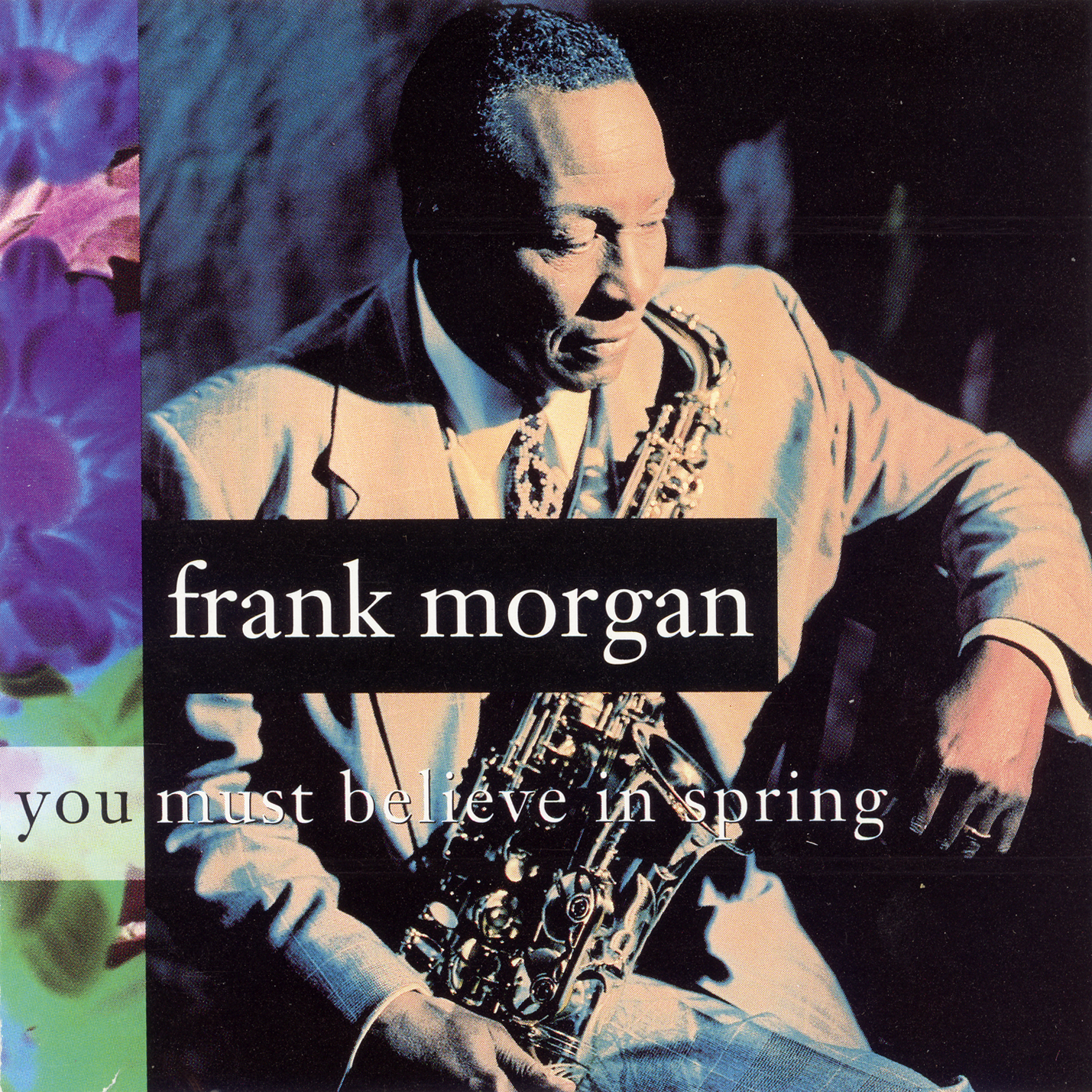
Frank Morgan - You Must Believe in Spring


“A ‘92 release by marvelous alto saxophonist Frank Morgan, whose life story and triumph over heroin addiction and imprisonment was one of the ‘80s’ great success tales. Morgan’s biting, yet sensitive and rich alto has rightly been traced to Charlie Parker, but Morgan long ago rid his style of any imitative excesses. He was excellently supported on this program of duets by an amazing lineup of rotating pianists: Kenny Barron, Tommy Flanagan, Barry Harris, Roland Hanna, and Hank Jones.” (Review by Ron Wynn for AllMusic. See here.)

Performers: Frank Morgan (a-sx), Kenny Barron/Tommy Flanagan/Barry Harris/Roland Hanna/Hank Jones (pi)

1. Kenny Barron - But Beautiful
2. Frank Morgan & Kenny Barron - You've Changed
3. Tommy Flanagan - With Malice Towards None
4. Frank Morgan & Tommy Flanagan - Something Borrowed, Something Blue
5. Barry Harris - I Should Care
6. Frank Morgan & Barry Harris - Embraceable You
7. Frank Morgan & Barry Harris - While The Gettin's Good Blues
8. Roland Hanna - My Heart Stood Still
9. Frank Morgan & Roland Hanna - Enigma
10. Hank Jones - I Cover The Waterfront
11. Frank Morgan & Hank Jones - You Must Believe In Spring
12. Frank Morgan & Hank Jones - Come Sunday

Friday, 5 February 2021

Horace Silver - 6 Pieces of Silver


"The release of this LP by the Horace Silver quintet has more significance than might appear on the surface; for although Horace's career on records in general and on Blue Note in particular has covered a broad area of styles, performances and groups, this is the first time he has ever been able to present, and present with pride, a permanently-formed combo of his own.

"There are many of us who felt that this step was long overdue, not only in terms of his talent, but also on the strength of his personality. His mild manner, pleasant speaking voice and clean living habits seemed to equip Horace for the role of leader, and if the reaction of night club owners in recent months is any yardstick, he didn't start a moment too soon.

"Since this is, then, a milestone in the Silver career, it might be advisable to pause and recapitulate briefly the biographical backgrounds of each member of the quintet as it is heard on these sides, since the writers of liner notes tend too often to take for granted a knowledge of all these facts on the part of the fan.

"The leader was born Horace Ward Martin Tavares Silver in 1928 in Norwalk, Conn. After saxophone studies in high school and private piano lessons, he played gigs around Connecticut on both tenor and piano. It was after Stan Getz heard him in Hartford that he was hired to tour with the Getz quartet, staying with the group for a year in 1950-51. Settling in New York City, he worked frequently during the next year with Art Blakey, as well as with combos led by Terry Gibbs, Coleman Hawkins, Lester Young, Bill Harris and others. From then until he formed his own group, he was most frequently a part of the Jazz Messengers.

"Hank Mobley, Horace's tenor man, was born in Eastman, Georgia in 1930, but was raised in New Jersey. After working with rhythm and blues groups until 1950, he jobbed mostly with Max Roach from 1951-53, spent several months with the Gillespie group in '54 and since then has been with Horace, first in the Jazz Messengers and now in the Silver quintet.

"Donald Byrd, Horace's trumpeter on this date, was born in Detroit in 1932, the son of a Methodist minister who was also a musician. He studied at Cass Tech High, Wayne University and Manhattan School of Music. After serving in the Air Force from 1951-53 and then working with local groups, he came to New York and played with George Wallington's group and Blakey's Messenger in 1955.

"Twenty-two-year-old Doug Watkins, also a Cass Tech man from Detroit, was schoolmate of Byrd and of bassist Paul Chmabers, who is his cousin by marriage. Leaving home with James Moody in '53, he settled in New York in August, 1954 and gigged mostly with the men in and around the Messengers.

"Louis Hayes, Horace's talented young drummer, is only 18 years old and is also a Detroiter; he replaced Art Taylor on very short notice in this group, and according to those of us who have heard him at Birdland and on other gigs, he shows signs of becoming a big name before too long.

"With the exception of one standard tune, the music heard on this first session by Horace's new group consisted entirely of Silver originals. 'Cool Eyes' is a swinging opener; notice the interesting use of the double augmented effect at the 23rd bar of the theme. The performances lend an extra sense of construction in that the solos are tied together by eight-bar unison interludes. Mobley, Byrd and Horace have extended solo space and Watkins walks a while. After the closing ensemble, in which the piano plays unison along with the horns, the last phrase is repeated effectively in descending keys.

"'Shirl', named for a young female friend, is a piano solo with rhythm, pensive and delicate, striking a sort of 'Stella by Starlight' mood.

"'Camouflage' has an unusual device in the rhyhthm pauses during the solo, as a result of which it seems to swing as much as anything in the album, yet in a slightly different way. Hank, Horace and Donald are featured in that order.

"'Enchantment' is an exotic theme that demonstrates how much can be extracted from the use of two-part harmony. Notice the use of an unorthodox Latin beat in which the third eighth not is left open; Louis Hayes's use of mallets; Horace's employment of octaves and other devices not typical of him.

"'Señor Blues' is, for this listener at least, the most exciting of the seven performances on these sides. Set in a minor key with the horns voiced, it is in a triple time, which Horace describes as 6/8, though I would be inclined to call it 12/8. The performance is full of tricky rhythmic and counter-rhythmic effects. When piano solo time arrives, the rhythm changes again and of this time signature Horace confesses, 'I don't know what you call that!' (We call it fine and funky.) Both in its solos and in the ensemble approach, this is a striking demonstration of the degree of originality to which the twelve-bar motif can be stretched.

"'Virgo', named for the sign under which Horace was born, is a fast unison theme in which the solos again are spelled by eight-measure interludes. Horace, on his solo here, is a fluent as a pianistic Charlie Parker. Louis Hayes, after trading fours with the horns, has a long solo, and there is a suddent bop-style ending.

"'For Heaven's Sake', a popular song of a few years ago, is given the same brand of treatment as 'Shirl', a piano solo in a pleasantly relaxed ballad mood.

"It need hardly be pointed out in conclusion that this record debut by the new Silver quintet augers a successful future for Horace as a leader. Assuming the main ingredients of success are talent, ambition and luck, it can safely be said that Horace is already two-thirds of the way there." (Leonard Feather. From the liner notes.)

Performers: Horace Silver (pi), Donald Byrd (tp), Hank Mobley (t-sx), Doug Watkins (bs), Louis Hayes (dr)

A1. Cool Eyes
A2. Shirl
A3. Camouflage
A4. Enchantment
B1. Señor Blues
B2. Virgo
B3. For Heaven's Sake

Gene Ammons - Young Jug


"A young Gene Ammons asserted his formidable ability to play the tenor saxophone in Chicago from 1948 to 1952. These sessions from the Chess label (reissued when the GRP label bought the masters) represent this coming of age in jazz contexts ranging from bop and blues to many ballads and hints of the big-band sound. While his sound is typically robust and gutsy, there's also quite a bit of evidence that Ammons was capable of playing tender and sweet, but at the base of all this music is the blues. A variety of bands are heard, but certain groups with certain sidemen are most notable, as they showcase the tenor man in distinctly different ways and means. Guitarist Leo Blevins and pianist Junior Mance are the finest contributors on the first two-thirds of this collection. Blevins uses a restrained tone mostly on chords during the classic swinger written by Coleman Hawkins, 'Stuffy', and is marvelous in his restraint during the ballads 'Once in a While' and 'Pennies from Heaven', the latter with a featured second line from muted trumpeter Bill Massey. Mance is the best in a jazz-blues vein, whether on the slower, fully flowered tunes 'Goodbye', 'You Go to My Head', and 'My Foolish Heart', the best small group swingers 'Baby, Won't You Please Say Yes' and 'You're Not The Kind', or in a larger combo aside the wailin' and boppin' of Ammons, Massey, and trombonist Matthew Gee during the quintessential Shorty Rogers number 'More Moon' based on 'How High the Moon' or titled 'Full Moon'. Energized and animated, Ammons goes to town on the hucklebuck style of 'Jug Head Ramble', honking and sprawling in a call-and-response with Mance and Blevins, baritone saxophonist Sonny Stitt, and unsung drummer Wes Landers. The last four tracks again have Stitt on baritone, not tenor as he and Ammons would adopt in later life as a most famous tandem, with Massey and trombonist J.J. Johnson forming a mighty horn line. Massey's 'Beezy' is the hottest and heaviest tune, 'I'll Walk Alone' uses the most teamwork, and the other two, 'Old Folks' and 'Somewhere Along the Way' are more the sultry vehicles for Ammons with the others taking a back seat. This CD is an interesting window into the early germination period of a true jazz giant, and despite a somewhat thin production sound indicative of the era, is well worth finding and owning." (Review by Michael G. Nastos for AllMusic. See here.)

Performers: Gene Ammons (t-sx), J.J. Johnson/Matthew Gee (tb), Sonny Stitt (br-sx), Leo Blevins (gt), Christine Chatman/Junior Mance/Willie Jones (pi), Leroy Jackson (bs), Teddy Stewart/Wes Landers (dr)

1. Swingin' For Xmas
2. It's The Talk Of The Town
3. Stuffy
4. Once In A While
5. Pennies From Heaven
6. More Moon
7. Tenor Eleven
8. Goodbye
9. You Go To My Head
10. My Foolish Heart
11. Jug Head Ramble
12. Don't Do Me Wrong
13. Prelude To A Kiss
14. Baby, Won't You Please Say Yes
15. Happiness Is A Thing Called Joe
16. You're Not The Kind
17. I'll Walk Alone
18. Old Folks
19. Beezy
20. Somewhere Along The Way

Thursday, 4 February 2021

Z-Ro - Crack


"Z-Ro is not a people person. Though his rhymes are replete with gunplay and tough talk, the underlying message of Houston’s reigning underground king is one of distrust. To hear Ro tell it, every friend is disloyal, every woman a gold digging groupie and the only proper response is reclusion. Call it emo-rap or call it a therapy session. When he raps suicide, he’s not talking about car doors.

So it’s disconcerting that 'Crack', roughly his tenth proper album (depending on how you’re counting certain side projects and undergrounds), opens with a blissful, almost childlike melody. Ro playfully outlines his concept – his music is a drug (this is a factual statement, not a metaphor, as any Ro junkie can verify) and he’s set to deliver 14 new songs to overdose on. The first of which, believe it or not, is a full-fledged ballad. If 'Baby Girl' is to be believed the once hardened Z-Ro has finally found love. 'No longer do I have to search / she’s a dime but she’s down to earth / it’s understood to me she gotta be my baby girl' You’d almost mistake it for sarcasm, if he didn’t seem so damn earnest.

Fortunately (for the listener, not so much for Z-Ro – keep your head up, buddy) this is a curveball, a brief moment of misplaced happiness. Almost immediately after declaring his undying loyalty to this nameless lady friend he’s back on the loner tip, finding solstice only in dead presidents. He intimates: 'My grandmother told me the pillow don’t love you back / but God never took one of my ribs and made me a woman, I’ma concentrate on my stacks.' Or, more to the point, 'bitch you ain’t gotta call my phone.' But Crack isn’t just about drama. Z-Ro's also a spitter in the purest sense, the midpoint between 2Pac's raw emotion and Bone's singsong technicality. The screwed '25 Lighters' finds him freestyling for a good nine minutes straight just because he can.

The production, split between Ro himself and underground H-Town stalwarts like Cory Mo and Mr. Lee is appropriately morose. Post-Screw, the above ground Houston sound has mostly turned larger then life, more showboating car show buzz than promethazine burn out. In Z-Ro's hands it’s just mournful (and, in some ways, much closer to DJ Screw's original vision). Consider Biggie's once grandiose boasts of 'large estates with larger steaks'. Now slowed to a crawling hook on 'Made' they evoke a suffocating emptiness. Z-Ro sees straight through the vapidity of bottle popping models and a prime cut fillet. Self made millionaire or not, he’s still alone." (Review by Andrew Nosnitsky for HipHopDX. See here.)

1. Crack (Intro)
2. Baby Girl
3. Here We Go
4. Call My Phone
5. If That's How You Feel
6. Lonely
7. Made
8. The Mo City Don
9. Top Notch
10. Rollin
11. Tired
12. You
13. Eyes On Paper
14. 25 Lighter
15. Paid My Dues

Eddie "Lockjaw" Davis & Johnny Griffin - Battle Stations


"The two-tenor team, of which the partnership between Eddie 'Lockjaw' Davis and Johnny Griffin is a most distinguished example, came into its own in jazz when Gene Ammons and Sonny Stitt got together back in the mid-forties. Actually, though, Count Basie might be credited with the true ancestry of this jazz genre. Basie was the first bandleader to feature two tenors, back in the days of Lester Young and Herschel Evans, and this kind of intramural rivalry has been a trademark of Basie's bands ever since - through the Lockjaw-Paul Quinichette and Frank Foster-Frank Wess days down to the current Foster-Eric Dixon team.

"It's a good jazz sound, and it rarely sounded better than in the hands and lungs of the two tenor stars who teamed up a couple of years ago and worked hard and well to keep the group alive. Unfortunately, they were forced to go their separate ways in early 1963, due to the economic vagaries of the tight jazz scene. Thus, there is a kind of nostalgia attached to listening to this album, as well as satisfaction in knowing that the group was captured on wax once more before disbanding.

"Lockjaw Davis (b. 1921) was the senior partner in this swinging enterprise. His very individual and distinctive style, rooted in the approach of the Hawkins-Webster school but with a strong bop flavor, blends well with that of Johnny Griffin (born 1928). Both men are what is sometimes called 'hard' players - meaning that they favor a big, strong sound and employ forceful rhythms and expressionistic coloration. There are differences (Johnny tends to play more notes than Lock and employs a smoother tone) but the similarities often outweigh them, and there are times, as when the boys trade 'eights' or 'fours', when it can become quite a game to sort them out. Most importantly, though, Lock and Griff always seem to turn each other on - a fact that is apparent in the music but also supplied special kicks when seeing the group in person.

"A characteristic of the Lockjaw-Griffin partnership was the consistent presence of strong, swinging rhythm sections. The gentlemen on deck here are in that tradition. Others who passed through the ranks included pianists Junior Mance, Horace Parlan and Lloyd Mayers; bassists Gene Ramey and Larry Ridley; and drummer Clifford Jarvis. This album offers a pleasant opportunity to hear Norman Simmons, a very gifted pianist, arranger and accompanyist (he wrote for Griffin's short-lived 'Big Soul Band' and worked with Dinah Washington and Carmen McRae). He is extensively featured here. Bassist Vic Sproles is a solid swinger, and Ben Riley, the group's original drummer, is well-attuned to its needs.

"This is straightforward, free-wheeling, no-nonsense jazz. It will make you tap your foot and shake your head, and at time the shouting and hollering will make you laugh out loud. In a day when preciousness and self-conscious striving for novelty burdens much of modern jazz, it's good to hear this kind of music. It's a kind of jazz that, hopefully, will always be with us. Lock and Griff are back on their own now, but it is certain that both of them have come away from their time of togetherness with a little something of each other that will always stay with them.

"'What's Happening' is an uptempo blowing line, a kind of warmup exercise. The head, played in unison, is brief and things soon settle down to extended blowing. The solo order, as it is throughout, puts Lock on deck first, followed by Simmons and then Griff. There are nice eights and fours at the end.

"'Abundance' used to be announced by the partners as 'A Bun Dance', and it works both ways. It's a soul-type tune with effective use of stop time and real linear interplay between the two horns in the ensemble. Simmons has a particularly good solo spot.

"'If I Had You', the only standard in this set, is taken at a relaxed medium tempo. Lock kicks off with a well-built solo excursion, growing from a restrained opening to some real shouting. Griff gets right up there with him. After Griff's solo, Davis returns with the channel, and then there is a nice conversation on the last eight.

"'63rd Street Theme' is a Latin-flavored minor blues, brought on by a piano-and-rhythm intro. Griffin's solo is one of his best of the set, and the entire performance has unity and form.

"'Pull My Coat' starts with a walking bass intro. The unison theme statement features tasty piano fills. Both tenors dig in on this one, with plenty of 'rapprochement'.

"'Hey Jim!' has a light, springy beat that sets the horns well. It is reminiscent of the kind of line featured by Ammons and Stitt, and there is a happy passage just prior to Lock's solo where the two tenors really boots each other. Griffin's solo has some of those staggering fast runs which have become a trademark of 'the little giant'.

"Take this album home and pull back the rug and shake your buns, or get out some cold beer and settle down to listen. Whatever your pleasure, it will be increased considerably in the company of Lockjaw, Griffin & Co. and their happy, swinging jazz." (Dan Morgenstern, August 1963. From the liner notes.)

Performers: Eddie "Lockjaw" Davis (t-sx), Johnny Griffin (t-sx), Norman Simmons (pi), Victor Sproles (bs), Ben Riley (dr)

A1. What's Happening
A2. Abundance
A3. If I Had You
B1. 63rd Street Theme
B2. Pull My Coat
B3. Hey Jim!

Sunday, 31 January 2021

Toshiko Akiyoshi & Lew Tabackin - Mosaic Select 33


"The Toshiko Akiyoshi-Lew Tabackin Big Band was the premier recording and touring ensemble of its time in the mid- to late '70s, recording five albums for the RCA Victor label, and stunning audiences with sheer virtuosity and the charts of the Japanese born pianist. A symmetry between Asian culture and American bop made this orchestra most unique, exciting, and above all, highly original. This three-CD set contains the quintuple RCA studio recordings that set a high bar for all others to follow, and gave stiff competition to people like Gil Evans. Akiyoshi wrote music well suited to her rising stars and established veterans, while Tabackin was given more than ample opportunity to express himself on tenor sax, and especially his vibrant flute. This band also grew talent that would go on to become leaders, including Bobby Shew and Gary Foster, those who developed into section leaders like Phil Teele, Bill Reichenbach, and Dick Spencer, and trusted veterans Britt Woodman, Bill Perkins, Don Rader, and King Errison. 'Kogun', with its stunning surf wave/saxophones/Hollywood mountain art work, kicks off the program, as 'Elegy' comes out of the gate roaring in bop style via Akiyoshi's Bud Powell-influenced pianistics. Tabackin is a one-man army of atmospheric flute over tsuzumi drums and moaning sumo-type vocals as a strained, yearning sound identifies the title track in 5/4 time. 'American Ballad' is very much in the Duke Ellington vein with Woodman featured, while the bop/blues 'Henpecked Old Man' reiterates and expands on a theme Akiyoshi wrote in 1964, featuring Shew and Spencer. Where 'Long Yellow Road' is perhaps the most popular of the original vinyl issues, the title track was available on 'Kogun', initially going back to the 1960 Akiyoshi-Mariano quartet with then husband, saxophonist Charlie Mariano. It's an incredible, dynamic, substantive jazz melody, orchestrated in regal, opulent tones by the big band, also soulful, grooving, and full of double stops. 'Opus Number Zero' is a 4/4-to-waltz swiss cheese hard bop, 'Quadrille, Anyone?' a gospel jazz waltz, and 'Since Perry/Yet Another Tear' another Ellington-type epic as drummer Peter Donald and the saxes line up, then shout out. developing a bop-to-blues-to-ballad construct. 'Tales of a Courtesan' is perhaps the least acclaimed of the five albums, though 'Road Time Shuffle' is classic in the Count Basie tradition, 'Strive for Jive' was a popular item featuring Tabackin's Eric Dolphy-esque scattered tenor, and 'Village' perfectly evokes the balance between Eastern and Western cultures, with churning 5/4 Afro-Cuban rhythms surging between Akiyoshi's deft piano and three layered horns in counterpoint - a simply brilliant piece of music. Where the recording Insights, from 1976, succeeded in emphasizing the Japanese koto aspect of Akiyoshi's heritage during the magnum opus suite 'Minimata' with children's voices, floating horns, long-winded bop,and drama under the spare horns, it is not the definitive piece. That honor goes to 'Sumie', a spiritual chart as Tabackin's piccolo is frighteningly haunting. 'Studio J' is yet another memorable jazz chart more easily swung, and a staple in many other jazz big band's repertoires 'March of the Tadpoles' from 1977 is the last of the five albums, but retains unusually disparate high points, with a feature for Tabackin's tenor on the ballad 'Mobile', more bop mixed with Latin samba during 'Deracinated Flower', the flute blues 'Yellow Is Mellow', and the choppy 'Notorious Tourist from the East' in a modal framework built for the players to work out and freely discourse. If you do not already own these recordings and are a progressive big-band fan, it is in your interest to search for this quintessential collection. Mosaic Select has hit a grand slam with this reissue, featuring a band in their early years that has hit on all cylinders since its inception, and never lets off the gas. It comes with an absolute highest recommendation." (Review by Michael G. Nastos for AllMusic. See here.)

1.1. Elegy
1.2. Memory
1.3. Kogun
1.4. American Ballad
1.5. Henpecked Old Man
1.6. Long Yellow Road
1.7. The First Night
1.8. Opus Number Zero
1.9. Quadrille, Anyone?
1.10. Children In The Temple Ground

2.1. Since Perry/Yet Another Tear
2.2. Road Time Shuffle
2.3. Tales Of A Courtesan
2.4. Strive For Jive
2.5. I Ain't Gonna Ask No More
2.6. Interlude
2.7. Village
2.8. Studio J
2.9. Transcience
2.10. Sumie

3.1. Minamata
3.2. March Of The Tadpoles
3.3. Mobile
3.4. Deracinated Flower
3.5. Yellow Is Mellow
3.6. Notorious Tourist From East

Onzy Matthews - Mosaic Select 29


"The brilliant West Coast arranger Onzy Matthews was a master of the blues in many hues. He contributed to important recordings by Lou Rawls, Ray Charles and Esther Phillips and made two albums for Capitol, the first of which, 'Blues with a Touch of Elegance' is considered by many to be a big band masterpiece. This set collects those albums plus 29 previously unissued Capitol tracks by Matthews. These big band sessions include soloists Sonny Criss, Gabe Baltazar, Curtis Amy, Clifford Scott, Dupree Bolton, Bobby Bryant, Bud Brisbois, Lou Blackburn, Ray Crawford and Richard Groove Holmes. An added bonus is the legendary, previously unissued two-tune session by Earl Anderza and Dupree Bolton for Pacific Jazz." (From the liner notes.)

1.1. A New Samba For Margo
1.2. A Second Chance (Song For The Two For The Seesaw)
1.3. Bossa Nova Blue
1.4. Little Boat (O Barquinho)
1.5. Lover Man
1.6. Ho-Ba-La-La
1.7. Almost In Your Arms (Love Song From Houseboat)
1.8. Canadian Sunset
1.9. Non-Stop Jazz Samba
1.10. Without Your Love
1.11. Bossa Nova In Minor
1.12. One Note Samba
1.13. Lillies Of The Field
1.14. Joe And I
1.15. Midnite Lament

2.1. Blues With A Touch Of Elegance
2.2. Flamingo
2.3. Pensive
2.4. Feels Like I've Got The Blues
2.5. Dallas Blues
2.6. Somethin's Cookin'
2.7. I Should Care
2.8. Blues Non-Stop
2.9. I Cover The Waterfront
2.10. Satin Doll
2.11. Burnin'
2.12. Blues Non-Stop
2.13. I Cover The Waterfront
2.14. Dallas Blues
2.15. Somethin's Cookin'
2.16. Lefty Louie Blues
2.17. Blues Non-Stop

3.1. Ray-On Blues
3.2. You'll Know The First Time
3.3. Moon River
3.4. Like Someone In Love
3.5. Ballad For Orchestra
3.6. I Left My Heart In San Franscisco
3.7. A Set For Gillette
3.8. Spring Is Here
3.9. Down In My Soul
3.10. Make Someone Happy
3.11. People
3.12. Play Me Some Blues
3.13. White Gardenia
3.14. Lilles Of The Field
3.15. Mexicali Brass
3.16. Blues For The Reverend
3.17. Put On A Happy Face
3.18. I Thought About You
3.19. Guess I'd Better Go Back Home

Carl Ditters von Dittersdorf - Ester


"Carl Ditters von Dittersdorf (1739-1799), the Viennese contemporary of Haydn and Mozart, was one of the most popular musicians of his age. Owing to his success as a performer - he was a fêted virtuoso violinist of aristocratic and court orchestras in Vienna - he began composing on a regular basis at a relatively late age, in the late 1760s. However thanks to his fantastically fast rate of work, his technical accomplishment and diligence he still left behind an exceptionally rich life-work - we know of some 100 symphonies, 34 operas, 30 concertos and divertimentos as well as a large number of chamber and vocal works. His natural, carefree, almost routine method of composition was accompanied by a stylistic ideal that set as its aim the basic rules of social music fashionable both with the aristocracy and the general public - good taste, clarity, elegance of form and adherence to tradition. As a result of a visit to Vienna in 1772, after his work 'Isacco' written in 1766, he once again embarked on composing oratorios which are not intended for the stage.

"The oratorio, which bears the title 'La liberatrice del popolo giudaico ossia L'Ester' (The Rescuer of the Jewish People, or Esther) is based on parts three and four of The Book of Esther, or more exactly, it uses the motifs of these sections. The writer of the Metastasianic libretto Salvator Ignaz Pintus, renounces the requirement of presenting the whole story, and indeed, he even renounces following the dramatic thread which was usual in the earlier baroque oratorios, as for example, in Handel's Esther Oratorio. Instead of adhering to the logic inherent in the plot, the poet places tableaux and scenes depicting emotions which were arrived at by magnifying certain episodes, side by side, often in an arbitrary manner without any interrelationship. The original story relates how, at the time of their Babylonian captivity, the Jewish people, with the help of Esther, escape being massacred. Esther, the lovely wife of King Ahasverus (Xerxes) undertook, at the risk of her life, to plead with the king for mercy for her people, to save them from the wrath of the Persians. At Dittersdorf's request, it was really the mass scenes that received the emphasis in the libretto. With the exception of the duet of Ahasverus and Esther, only the choral sections refer directly to the biblical story. In the introduction of the various characters the librettist distorts the essence and reduces characterization to the love relationship. The texts of the solos, recitative and arias refer in such symbolical and abstract manner to the imaginary background of the plot that often we can only surmise which biblical character corresponds to the relevant role.

"Yet from a musical standpoint the aria texts are of immeasurable value: by means of a detailed, pliant introduction of the various emotional states and situations they created conditions for the realisation of more complex musical forms, arias of sonata form or of several sections. In other words they helped the development of baroque da capo arias into multi subject classical forms. Under the influence of the heritage of Carissimi's and Handel's choral oratorios, Dittersdorf's choral movements evoke the memory of the old, more severe, restricted style.

"The recitativo accompagnatos and arias are already unambiguous classical vocal forms, characters and intonations." (Márta Grabócz. From the liner notes.)

Performers: Liszt Ferenc Kamarazenekar, Budapesti Madrigálkórus, Ferenc Szekeres

1. Ouverture
2. 'A Crude Morte Traggansi'
3. 'D'Abramo, Isacco I Figli'
4. 'In Qual Profondo'
5. 'Ferma, T'arresta'
6. 'Per Noi Quel Core S'agita'
7. 'Fra Le Sventure Estreme'
8. 'Dunque Susa Lodò'
9. 'Ester, Cara Mia Vita'
10. 'Numi Pietosi, Dite'
11. 'Ah, Se In Vita'
12. 'Fra Le Caligini'
13. 'Di Persia Nella Reggia'
14. 'La Persia Ed Isdraello'

Giovanni Legrenzi - Dies Irae; Sonate a Quattro Viole; Motetti


"Born in Clusone in 1626, Giovanni Legrenzi had an eventful career that was marked by several positions in particular. Not only was he organist at Santa Maria Maggiore in Bergamo and maestro di capella in Ferrara, but he was also a candidate for various other important positions, including those of maestro di capella for San Petronio in Bologna and for the Cathedral in Milan. He had even been offered one of the four 'sous-maître' positions at Louis XIV's Chapelle Royale after the departure of Thomas Gobert in 1668. We also know that he had hoped to win a place at the Viennese Court, as can be seen from a letter dated 1665 in which Legrenzi asked the Duke of Mantua to intercede on his behalf with the Emperor.

"Even though he did not gain the post he desired, it is certain that Legrenzi had many fruitful contacts with the Viennese Courts. Several of his oratorios were written for the 'Capella dell'Imperatrice' or the 'Capella dell'Imperatore' from 1665 onwards, as well as in 1676, 1692 and 1707. Later, undoubtedly with the same end in view of gaining a place in Vienna, he dedicate his volume of instrumental pieces entitled 'La Cetra' to the Emperor. Published in 1673, it is composed of violin sonatas. It seems that Legrenzi had nevertheless taken care to include two compositions in this publication that would certainly appear to its dedicatee as a highly respectful token of the Emperor's acquaintance with musical tastes in Austria at the end of the 17th century, these being two 'Sonate a quatro viole da gamba'. The viola da gamba and more particularly the 'concerto de viole' was still very much appreciated in German-speaking countries and especially in the circle around Leopold I, a musician as well as Emperor. The dedication, however, failed yet again to have its desired effect. We should add that Legrenzi had also failed to win the post of maestro di capella for St. Mark's in Venice several years earlier, losing the post by only one vote. Legrenzi would have to wait for Antonio Sartorio's departure in 1681 before finally gaining this pinnacle of his career.

"Legrenzi was an extremely productive composer: his works include twenty operas that were performed in Ferrara and in Venice in particular between 1668 and 1684, the ten oratorios already mentioned that were performed in Vienna, printed collections of instrumental music both sacred and secular that make up 18 opus numbers, as well as a great quantity of various works that remained in manuscript form.

"Such is the case with the 'Dies Iræ' recorded here, the most important work of the recording. The manuscript was curiously enough preserved in the Bibliothèque Nationale in Paris (Vm 1298) with the title 'Prosa pro mortuis, 8 voc. cum 3 viol. et organo del Sgre Maestro Legrenzi'. How did this manuscript come to find its way to Paris? Could is be linked to the offer made to him to become a member of the Chapelle Royale? Whatever the truth may be, it seems that his music had indeed been heard in France, in particular at the private concerts organised by Nicolas Mathieu, parish priest of the church of Saint André-des-Arts; many Italian names are to be found in the list of composers whose works were performed at these concerts, including Rossi, Cavalli, Cazzati, Carissimi, Stradella and Legrenzi. What is more, we know that the Abbé Mathieu's library contained many volumes of Italian music.

"This 'Dies Iræ' may well be associated in one way or another with the discover of Italian music that was being made by those who madeup the Abbé's inner circle. It is highly likely that it is only one part of a much larger composition, i.e. a full Requiem Mass. The composition call for two vocal quartets accompanied by a viol quartet. Even though the manuscript's use of the word 'viol.' may give rise to come confusion as to whether viols or violins were intended, the low tessituras used and the polyphonic style employed unequivocally display the characteristic style of the ensemble of viols. As far as the voices are concerned, it is clear that we are dealing with an ensemble of eight solo voices rather than block choral writing; the soloists take over all the verses either as solo voices, duos, trios, quartets or sextets and, naturally enough, the 'tuti'.

"The ensemble of viols adds its commentary to a good number of the verses, not only to the sections in eight parts but also to certain of the others, providing a polyphonic accompaniment to several solos. It plays a solo role only in the few bars of the Symphonia at the beginning of the sumptuous 6-part 'Ingemisco'.

"This 'Prosa pro-mortuis' nevertheless raises other questions, one of these being the date of its composition and the other being the identification of the chapelle for which it was written. It is not at all easy to provide an answer to the first of these questions, but it is possible to supply a possible solution for the second. Certain elements of the work make one think that it could have been composed for Vienna; on the other hand the concerto de viole that Legrenzi had used in the two 'Sonatas' from 'La Cetra' that had been dedicated to the Emperor Leopold I, and on the other the work's astonishing similarity to the 'Requiem' by Johann Kaspar Kerll that had been published in 1689. Kerll was the organist to the Viennese Court and had been a pupil of Carissimi in Rome. His Requiem also makes use of a vocal ensemble accompanied by a quartet of viols. Its 'Dies Iræ' is intricately structured also; each verse is presented in a different way and uses various combinations of singers and viols. Given that the date of Legrenzi's work remains unknown, it is there not possible to trace an exact link between the two compositions; we can only discuss their similar styles.

"Other works by Legrenzi recorded here include not only the two 'Sonate a quatro viole da gamba' from 'La Cetra' but also two motets for solo voice. These motets come from Legrenzi's op. 10 entitled 'Acclamationi divote', a volume of motets for solo voice and continuo that was published in Bologna in 1670. The source material for these motets is the copy that was preserved in the Bibliothèque Nationale in Paris. The motet 'Angelorum ad convivium' is here presented in its original form for solo voice and continuo, whilst the poignant motet 'Suspiro Domine' for bass is accompanied here by the concerto di viole. This accompaniment was written specifically for this recording by Philippe Pierlot in the polyphonic style that was often to be met with during the 17th century. We should add that various other scores often make use of this type of accompaniment, but that such sources are often silent as far as to precisely which of the instrumental parts should be either realised or reconstituted. (Jérôme Lejeune, tr. Peter Lockwood. From the liner notes.)

Performers: Ricercar Consort, Philippe Pierlot

1. Sonata Sesta A Quatro Viole Da Gamba
2. Prosa Pro Mortuis: Dies Irae
3. Prosa Pro Mortuis: Quantus Tremor
4. Prosa Pro Mortuis: Tuba Mirum
5. Prosa Pro Mortuis: Mors Stupebit
6. Prosa Pro Mortuis: Liber Scriptus
7. Prosa Pro Mortuis: Judex Ergo
8. Prosa Pro Mortuis: Quid Sum Miser
9. Prosa Pro Mortuis: Rex Tremendae
10. Prosa Pro Mortuis: Recordare
11. Prosa Pro Mortuis: Quaerens Me
12. Prosa Pro Mortuis: Juste Judex
13. Prosa Pro Mortuis: Ingemisco
14. Prosa Pro Mortuis: Qui Mariam
15. Prosa Pro Mortuis: Preces Meae
16. Prosa Pro Mortuis: Inter Oves
17. Prosa Pro Mortuis: Confutatis
18. Prosa Pro Mortuis: Oro Supplex
19. Prosa Pro Mortuis: Lacrimosa
20. Prosa Pro Mortuis: Pie Jesu
21. Ricercar Del Secundo Tono
22. Angelorum Ad Convivia
23. Sonata Quinta A Quatro Viole Da Gamba
24. Suspiro Domine

Antonio Lotti - Vesper Psalms


"During the first third of the eighteenth century Antonio Lotti (1667-1740) doubtless numbered among the most important Italian composers, but today general knowledge of his music hardly corresponds to its true significance. Lotti was born to a musician in Venice on 5 January 1667 and began receiving instruction from Lodovico Fuga (1643-1722) and Giovanni Legrenzi (1626-90) in 1682. Both Fuga and Legrenzi were employed at the Basilica of St. Mark (San Marco), Venice's principal church, and Lotti's career also continued to be closely connected with this church: on 30 May 1689 he was initially employed there as an alto chorister, but soon he was also assisting on the organ, and already on 30 May 1692 he was appointed second organist. On 17 August 1704 he assumed the post of first organist and continued to serve in this capacity for more than thirty years. Together with his duties at San Marco, Lotti wrote sacred music for other Venetian institutions. In addition, beginning in 1693 he composed many operas for the various theaters in Venice; these works became extraordinarily popular and brought him an appointment as music director at the Saxon-Polish court in Dresden for two years. The high point of his activity at the Saxon residence (and at the same time the end of his career as an opera composer) was marked by the premiere of 'Toefane' on 13 September 1719 on the occasion of the wedding of the Saxon Prince Elector Friedrich August and the Archduchess Maria Josepha, a daughter of Emperor Joseph I. On his return to Venice Lotti assumed his customary post and then on 2 April 1736, at the age of almost seventy, was selected as music director at San Marco, after having been unsuccesful in his first bid four years prior to this date. He died in Venice on 5 January 1740.

"Lotti's extraordinary fame as a composer of sacred music originated already during the eighteenth century. In 1770 the English music scholar Charles Burney heard 'a mass sung in four parts, without other instrument than the organ', by him at San Marco. From these years on he was regarded as an outstanding master of the 'a cappella' style. Exponents of reform movements in sacred music during the nineteenth century and early twentieth century celebrated him as 'one of the greatest sacred composers of all time', as a composer who together with Fux and Caldara 'elevated polyphony to new height in the musical focal points of Southern Europe, in Vienna and Venice, by drawing on the pure 'a cappella' style of the sixteenth century' (Vinzenz Goller, 1913). On the basis of such an elevation, Lotti's works in the traditional 'stile antico' gained a certain degree of dissemination, while his large-scale masses, mass numbers and psalms composed in the 'stile concertato' have met with the interest of musicians and musicologists only in very recent years. For example, the so-called 'Missa Sapientiae' met with some notice, and Johann Sebastian Bach, George Frideric Handel, as well as the Dresden church composer Jan Dismas Zelenka had copies of it. Other works of no less importance, however, continue to await their rediscovery today. The trail of this music leads to Dresden, among other places, where Lotti, together with a few outstanding singers, arrived in the autumn of 1717. These Italians were initially engaged for the opera but also assumed responsibility for the performance of sacred music on special occasions. Of their first performance on the Feast of St. Cecilia, the court church chronicler reported in absolutely rapturous terms (in an original Latin text), 'In what here is still an entirely unaccustomed manner the Ialian musicians who have been sent by His Serene Highness the Prince Elector from Venice to Dresden enlivened our church, when in honor of St. Cecilia, within the octave after her feast day, they presented a sung high mass that lasted almost three hours with such a marvelous artistic skill, both with respect to the vocal parts as well as the instruments, as one had never yet heard before in Dresden.'

"The Prince Elector of Saxony Friedrich August I, better known as August the Strong, had converted to the Catholic faith in 1697 in order to be able to present himself as a candidate for election as King of Poland. The sacred music in the Taschenberg opera house redesigned as a Catholic court church in 1708 had occupied a rather modest level until the arrival of the Italians and gained public attention only after their arrival. It is no longer possible to determine which compositions were performed in this church during the two years that Lotti spent there. As music director he may have written his own works for the use of this church or had works copied that had been composed earlier. The scores of the psalms recorded here are extant in the holdings of the Library of the German Land of Saxony - State and University Library in Dresden and are from the court church archive. These works do not belong to the tradition of Catholic church music proper in Dresden (since this tradition formed only later on) but instead very much adhere to proven Venetian models. Of them, the 'Credidi' and 'Laudate Dominum' also later found their place in the repertoire of the court church; they thus represent the Venetian component within the Dresden tradition, a component that would make its influence felt for some two generations.

"Large-scale psalm compositions played a central role in Venetian sacred music of the seventeenth and eighteenth centuries both in the Basilica of St. Mark as well in the famous conservatories for girls. Such compositions found their place in the vesper service, during which the opening versicle 'Domine ad adjuvandum me festina', the hymn of the particular feast, and the 'Magnificat' were also usually performed with figural music. In such compositions Lotti and his contemporaries to a great extent followed standardized models in the overall design of their works, and these models for the most part remained unchanged over several generations. The task of the individual consisted not in the invention of completely new possibilities but in the greatest possible original realization of the models set by the tradition. This applies in special measure to the 'Dixit Dominus', which was set very often as the opening psalm of the vespers on all the Sundays and feast days of the liturgical year and in which above all the assignment of the individual verses to choral and solo numbers was by and large set. Only a few of the individual versions realized by Lotti in his composing can be named here: at the beginning the alternation between 'Dixit Dominus Domino meo' (in each case two or three soloists) and 'Sede a dextris meis' (five-part chorus) on various degrees of the main key produces a large-scale entry portal taken up at the end again in 'Sicut erat in principio' ('As it was in the beginning'). Likewise, the ensuing six-part vocal number on 'Donec ponam inimicos tuos' (three altos and three basses), embedded in a simple string accompaniment, hardly finds parallels in the compositions of those times. The solo instruments employed in the individual movements of this composition also contribute not insignificantly to its musical diversity, with the oboe in 'Tecum principium' and the violin in 'De torrente in via bibet' offering two examples. In contrast, the only trumpet is employed only together with the tutti; in this function it was normally reserved for the opening and concluding psalms of a vesper service in Venice. A catalogue of musical compositions of the Catholic court church from 1765 lists not only the complete version but also an abbreviated version, but neither the score nor the part of this latter version are extant. Lotti's original composition was probably too extensive for Dresden circumstances and therefore reworked in keeping with them.

"'Laudate pueri' was almost used as frequently as 'Dixit Dominus' during the course of the church year. In this psalm too settings on the large scale and of many parts were the rule in Venice. In the present composition Lotti limited his vocal and instrumental resources to the use of three solo voices together with an instrumentarium consisting of strings and oboes. Until 'Qui habitare facit' the division of individual verses into contrasting sections so very frequent in the 'Dixit Dominus' is lacking. The center of the composition is occupied by the soprano solo 'Quis sicut Dominus' on the basis of a basso ostinato. Throughout the eighteenth century it of course was possible to use the traditional 'stile antico' not only in the setting of the 'Ordinarium Missae' but also in the setting of psalms. This style is employed rigorously in 'Credidi', a psalm ocurring not in the Sunday vespers but also in the formularies of some feasts of saints as well as on All Saints' Day and Corpus Christi. As a rule each half verse but often also a shorter part is endowed with a musical 'soggetto', and this subject is then led through several voices or through all four of them. Despite the relatively uniform outer course of the setting, here too the composer has the opportunity to emphasize individual words in the texts. At the beginning and end the eighth psalm tone is heard in the soprano part - and in addition, as the words of the text 'O Domine quia ego servus tuus' in the bass - and thus grounds the anchoring of the piece in the traditional practice on a broader level. On the other hand, the use of the 'stile antico' does not automatically mean doing without instruments. In the music archive of the Dresden court church there is an arrangement of Lotti's 'Credidi' by Giovanni Alberto Ristori (1692-1753), who was employed at the Dresden court from the end of 1715, and in this arrangement the strings, oboes and bassoon play together with the vocal parts directly or at the interval of an octave. This performance material offers solid evidence of the further use of the work in Dresden and served as the performance basis in the recording presented here.

"'Laudate Dominum' is the concluding psalm of the vespers of such important feasts as the Epiphany, Ascension, Pentecost and Trinity Sunday. With its length of only two verses together with the doxology, the text hardly offers the composer all that much space for development. As in the opening psalm 'Dixit Dominus', in his 'Laudate Dominum' Lotti included a single trumpet among the instruments. In the Dresden version, which also goes back to Giovanni Alberto Ristori, the trumpet is eliminated and two oboes are added in its stead, among other changes. The recording presented here, however, is based on Lotti's original version.

"Together with many other works, Antonio Lotti's vesper psalms first of all stand for the outstanding role played by Venice in European sacred music of the seventeenth and eighteenth centuries. In contrast to Antonio Vivaldi's works, which were composed at the same time or a little while later but today are much better known, Lotti's personal 'signature' is much more strongly marked by adaption to the resources of the human voice. There is one simple reason for this: Lotti began his career as a singer; Vivaldi as a violinist. With his activity as a singer and organist, Lotti from the very beginning had closer ties to the traditional compositional method. Within Venetian church music Lotti's works form the birdge between the traditional and the modern in unique fashion." (Gerhard Poppe, tr. Susan Marie Praeder. From the liner notes.)

Performers: Batzdorfer Hofkapelle, Sächsisches Vocalensemble, Matthias Jung

1. Dixit Dominus (Psalm 109): Dixit Dominus
2. Dixit Dominus (Psalm 109): Donec Ponam
3. Dixit Dominus (Psalm 109): Virgam Virtutis
4. Dixit Dominus (Psalm 109): Tecum Principium
5. Dixit Dominus (Psalm 109): Juravit Dominus
6. Dixit Dominus (Psalm 109): Dominus A Dextris Tuis
7. Dixit Dominus (Psalm 109): Judicabit In Nationibus
8. Dixit Dominus (Psalm 109): Implebit Ruinas
9. Dixit Dominus (Psalm 109): De Torrente In Via Bibet
10. Dixit Dominus (Psalm 109): Gloria Patri
11. Dixit Dominus (Psalm 109): Sicut Erat In Principio
12. Dixit Dominus (Psalm 109): Et In Saeculorum
13. Laudate Pueri (Psalm 112): Laudate Pueri
14. Laudate Pueri (Psalm 112): Sit Nomen Domini
15. Laudate Pueri (Psalm 112): A Solis Ortu Usque Ad Occasum
16. Laudate Pueri (Psalm 112): Excelsus Super Omnes
17. Laudate Pueri (Psalm 112): Quis Sicut Dominus
18. Laudate Pueri (Psalm 112): Suscitans A Terra
19. Laudate Pueri (Psalm 112): Ut Collocet Eum
20. Laudate Pueri (Psalm 112): Qui Habitare Facit
21. Laudate Pueri (Psalm 112): Gloria Patri
22. Laudate Pueri (Psalm 112): Sicut Erat In Principio
23. Credidi (Psalm 115)
24. Laudate Dominum (Psalm 116)

Antonio Lotti - Requiem; Credo; Miserere


"The music chronicles of the 18th century constantly draw our attention to a name held in great admiration and respect: Antonio Lotti.

"There are still numerous manuscript copies of his compositions to be found in libraries all over Europe, as testimony to the immense range and effect of his work. In strange contrast to the above we must add that hardly any of these wonderful compositions are available in modern editions. Lotti's sphere of activity was limited almost entirely to the Cathedral of San Marco in Venice. He probably grew up in Hanover (where his father Matteo Lotti was Hofkapellmeister); in Venice, we first find him studying with Giovanni Legrenzi, then as an extra alto in the choir, later as an organist and finally as 'maestro di cappella'. He had only one extended absence from his adopted home: in 1717, he accepted an invitation to the Court at Dresden from the Saxon Elector Friedrich August II and over the following two years he wrote several operas and much new sacred music there. In a report of November 22, 1717, we read:

"'In a manner quite unfamiliar here the Italian composers sent by His Excellency the Elector from Venice to Dresden have exalted our church by preparing in honour of Sain Cecilia within the octave of her feast day a sung High Mass lasting nearly three hours and executed with such admirable artistry both in respect of the singing voices and of the instruments as has never before been heard in Dresden.'

"Unfortunately it can no longer be determined with certainty which works Lotti brought with him to Dresden, which he composed there and which he sent to Dresden after his return to San Marco. Clearly the composer and the Elector remained in contact for some years. Many of these compositions are still in the archives of the Sächsische Landesbibliotek in Dresden. The operatic works 'Alessandro Severo', 'Ascanio', 'Teofane' and 'Giove in Argo' (with which the new Court theatre in the Zwinger was opened on September 3, 1719) are to be found in the library along with a string of important sacred works. Most of them are available in performing parts as well as in full score; some of them were prepared in the 1730s by the Dresden threatre and court composer Giovanni Alberto Ristori. Johann Sebastian Bach copied Lotti's 'Missa sapientiae' when he was in Dresden and joins the company of George Frideric Handel, Jan Dismas Zelenka and Johann Georg Pisendel among those German composers whose work was influenced by the encounter with Lotti and his music.

"The works on this recording are characteristic of Lotti's masterly treatment of diverse forms and compositional techniques. The 'Requiem in F major' is remarkable for its sheer abundance of invention. Artfully extended chordal harmony of laconic brevity; all the varieties of polyphony are tried up to eight-part harmony, and juxtaposed in thrilling contrast. Lotti by no means eschews the operatic gesture (see his six-part 'Rex tremendae majestatis') and touches the heart with his cantabile 'dolcezza' and tenderness in the arias and duets (with particular emphasis in the 'Recordare, Jesu pie' and 'Lacrimosa'). The sonic range of the orchestra is augmented with many new tone colours by imaginative and sometimes idiosyncratic use of the various instruments (e.g. the combination with muted trumpet).

"The 'Miserere in D minor' - performed annually in the cathedral of San Marco in Venice till the end of the 18th century during Lauds on the Thursday morning of Holy Week - shows Lotti's feeling for harmonic modulations of great sweetness and suppleness. It is impressive and instructive to see how the expansive Miserere text is here structured within a larg-scale plan of harmonic architecture and assembled into large units - and some may have thought this first happened with Bruckner!

"With its virtuoso-concertante style, the 'Credo in F major' is not dissimilar to Vivaldi's church music of the same period, even if one cannot entirely escape the impression of the conventional. In the Crucifixus, the heart of this five-section work, Lotti piles up the dissonances that we can only concur with a contemporary account which related that Antonio Lotti's sacred works are of such 'amazing euphony that one cannot say if this should conduce more to lamentation or to holy delight.'" (Thomas Hengelbrock, tr. Janet & Michael Berridge. From the liner notes.)

Performers: Balthasar-Neumann-Ensemble, Balthasar-Neumann-Chor, Thomas Hengelbrock

1. Requiem In F Major: Requiem Aeternam
2. Requiem In F Major: Kyrie Eleison
3. Requiem In F Major: Dies Irae
4. Requiem In F Major: Quantus Tremor
5. Requiem In F Major: Tuba Mirum
6. Requiem In F Major: Mors Stupebit
7. Requiem In F Major: Liber Scriptus
8. Requiem In F Major: Judex Ergo
9. Requiem In F Major: Quid Sum Miser
10. Requiem In F Major: Rex Tremendae
11. Requiem In F Major: Recondare, Jesu Pie
12. Requiem In F Major: Quaerens Me
13. Requiem In F Major: Juste Judex
14. Requiem In F Major: Ingemisco
15. Requiem In F Major: Qui Mariam
16. Requiem In F Major: Preces Meae
17. Requiem In F Major: Inter Oves
18. Requiem In F Major: Confutatis Maledictis
19. Requiem In F Major: Oro Supplex
20. Requiem In F Major: Lacrimosa
21. Requiem In F Major: Judicandus
22. Requiem In F Major: Domine Jesu Christe
23. Requiem In F Major: Hostias Et Preces
24. Requiem In F Major: Quam Olim
25. Miserere Mei Deus
26. Credo: Credo In Unum Deum
27. Credo: Crucifixus
28. Credo: Et Resurrexit. Presto
29. Credo: Sanctus. Allegro
30. Credo: Et Vitam

Friday, 29 January 2021

Antonio Lotti; Jan Dismas Zelenka; Johann Sebastian Bach


"The dictates of fashion were a powerful factor in music, too, over the centuries, exercising a substantial influence on the complex interaction between composers, their patrons and their public. Music went out of date in the space of a few decades - sometimes in the space of a few years. And this meant that many works that delighted the ear when they were first heard were soon forgotten again. Changing fashions consigned them to the recesses of musical archives, with only a handful of scholars and devoted librarians still aware of their existence.

"One exception to this rule was sacred music. Since the Reformation at the latest, with the processes of denominational rethinking that it triggered, the Church tended increasingly to preserve what it deemed to be worthwhile, and to keep these values present in people's minds. Thus the strict counterpoint with its deliberate outward plainness that was developed in the 17th century from the legacy of Palestrina and other Late Renaissance masters, and was elevated to the ideal of a time-honoured stile antico, remained the central point of reference for many composers of religious music in the 18th century. These composers studied and made use of the 'old style' in some cases in its pure form, in others by adapting it sensitively to suit the taste of their own time.

"Jan Dismas Zelenka, Johann Sebastian Bach and Antonio Lotti - all three composers had a good command of the traditional church style and its adaption for which they were admired by contemporaries. And although they never actually met, their biographies are connected through Zelenka.

"Lotti was born in 1667 in Venice and spent most of his life in his native city, where - like so many successful composers of his time - he worked both as a church musician (he was organist at St. Mark's) and as an opera composer. In 1717 he was given leave from his duties in Venice to spend two years at the Dresden court, where he enjoyed huge success. He returned to La Serenissima in 1719, remaining there until his death in 1740. He wrote five operas for Dresden, and also worked in the Hofkirche church together with the Italian musicians who had accompanied him to the city known as 'Florence on the Elbe'. A substantial number of sacred works by Lotti bear witness to this: some of them he wrote especially for Dresden, others he brought with him from Italy.

"When Lotti took up his position, Zelenka had already been playing the double bass in the Dresden court orchestra for a few years. But while Lotti was in Dresden, Zelenka spent most of his time in Vienna in the retinue of Friedrich August II, the heir to the Saxon throne. And in the city on the Danube, he took the opportunity to study with the kapellmeister at the Imperial court, Johann Joseph Fux, who was one of the most respected teachers of classical counterpoint. Zelenka also accumulated a collection of manuscript scores of the works of old masters while in Vienna, which he later made use of for his own compositions.

"After his return to Dresden, Zelenka was mainly responsible for the Catholic church music at court. In addition to composing works of his own - masses, music for vespers, litanies and compositions for Easter week -, his duties also included obtaining and arranging other composers' works. Among the music that Zelenka arranged for performance in the Dresden church there are also compositions by the erstwhile court kapellmeisters Antonio Lotti, including a mass in G minor/G major that consists only of a Kyrie and a Gloria; to distinguish this from other masses, Zelenka gave this one the name 'Missa Sapientiae'. [...]

"According to Bach's song Carl Philipp Emanuel, Zelenka was one of the composers who Johann Sebastian Bach knew personally and held in high regard. No documents have come to light so far providing any indication of how the two composers communicated, but Bach obviously had access to Zelenka's collection of scores, as there was a copy of the latter's arrangement of Lotti's 'Missa Sapientiae' in his own music library.

"For Easter week 1738, Zelenka made a setting of the penitential psalm 'Miserere mei, Deus' as a sequence of strongly contrasting movements. The complete text of the psalm itself appears in the second of the five movements; it is followed by the doxology 'Gloria Patri', which is spread over two movements. The two outer movements are choruses featuring only the agitated rhythms, first the orchestral parts penetrate one another with much dissonance, then the choir comes in and unfolds a lament of colossal intensity. Unlike many of his fellow composers, such as Lotti or Leonardo Leo, who a vividly discriptive text inspired to a rich variety of emotions and intonation, Zelenka opted for an approach that is nothing short of archaic. From his collection of music of the old masters - copies of scores that he had accumulated in Vienna - Zelenka picked out a recercar by Girolamo Frescobaldi and took the latter's strictly contrapuntal, four-part setting as the basis for his own vocal writing, which adheres pretty closely to the 100-year-old model. Under these circumstances, it is impossible for the music to reflect specific expressive nuances in the text - and indeed, this was clearly not Zelenka's intention. The dignity of the Old Testament text is emphasised by the venerable character of Frescobaldi's austere style. However, the core message of the psalm, a plaintive emotional outcry, does not simply recur like a motto in the contrapuntal writing, but also forms the unusually radical framework of the piece, and this not only regards the almost shocking extremes in the dynamics. Even in the context of Zelenka's many highly unconvential compositions, 'Miserere mei, Deus' is in a class of its own.

"Johann Sebastian Bach likewise had frequent recourse to both his own works and those of other composers, not least because, as cantor of St. Thomas's, Leipzig, he had an enormous workload to cope with. He originally wrote the cantata 'Weinen, Klagen, Sorgen, Zagen', BWV 12, in Weimar back in 1714, and he performed it again ten years later in Leipzig. On this occasion, he changed the original score, transposing it up by a tone. What's more, Bach later used the main part of the opening chorus, a chaconne that develops over a chromatically-led lament in the bass line, in his B minor Mass, where it appears, transposed, structurally enlarged and fitted with a new text, as the 'Crucifixus' in the Credo.

"The combination of chromatic writing and motet style is something that Bach's cantata shares with several settings of the 'Crucifixus' by Lotti, which with their radicalisation of classic counterpoint are among his most impressive works. But in some of his complete mass movements, too, Lotti also achieves moments of compelling expressiveness with similar means. Large parts of the 'Missa a tre cori', which he wrote in and for Venice, but also performed in Dresden, are laid out so that a constant alternation of intensely expressive, dense counterpoint with more loosely-woven passages ensures variety. As for the text itself, which is musically reinterpreted time after time as no other text had been since the Middle Ages: Lotti elicits entirely new facets from it. Thus the dance-like blithe spirits of the 'Gloria in excelsis Deo' is followed by an abrupt change of mood for the '...et in terra pax hominibus bonae voluntatis', a thought-provoking motet with obbligato orchestra. Contrasts like this occur throughout the work, but Lotti's mastery of his art - recognised by both Zelenka and Bach - is evident not least in the fact that he always manages the balancing act between different styles and expressive worlds." (Thomas Seedorf, tr. Clive Williams. From the liner notes.)

Performers: Balthasar-Neumann-Ensemble. Balthasar-Neumann-Chor, Thomas Hengelbrock

1. Jan Dismas Zelenka - Miserere In C Minor, ZWV 57: Miserere I
2. Jan Dismas Zelenka - Miserere In C Minor, ZWV 57: Miserere II
3. Jan Dismas Zelenka - Miserere In C Minor, ZWV 57: Gloria Patri I
4. Jan Dismas Zelenka - Miserere In C Minor, ZWV 57: Gloria Patri II
5. Jan Dismas Zelenka - Miserere In C Minor, ZWV 57: Sicut Erat
6. Jan Dismas Zelenka - Miserere In C Minor, ZWV 57: Miserere III
7. Johann Sebastian Bach - Cantata 'Weinen, Klagen, Zittern, Zagen', BWV 12: Sinfonia
8. Johann Sebastian Bach - Cantata 'Weinen, Klagen, Zittern, Zagen', BWV 12: 'Weinen, Klagen, Zittern, Zagen'
9. Johann Sebastian Bach - Cantata 'Weinen, Klagen, Zittern, Zagen', BWV 12: 'Wir Müssen Durch Viel Trübsal'
10. Johann Sebastian Bach - Cantata 'Weinen, Klagen, Zittern, Zagen', BWV 12: 'Kreuz Und Kronen Sind Verbunden'
11. Johann Sebastian Bach - Cantata 'Weinen, Klagen, Zittern, Zagen', BWV 12: 'Ich Folge Christum Nach'
12. Johann Sebastian Bach - Cantata 'Weinen, Klagen, Zittern, Zagen', BWV 12: 'Sei Getrost'
13. Johann Sebastian Bach - Cantata 'Weinen, Klagen, Zittern, Zagen', BWV 12: 'Was Gott Tut, Das Ist Wohlgetan'
14. Antonio Lotti - Missa A Tre Cori: Kyrie Eleison
15. Antonio Lotti - Missa A Tre Cori: Christe Eleison
16. Antonio Lotti - Missa A Tre Cori: Kyrie Eleison
17. Antonio Lotti - Missa A Tre Cori: Gloria In Excelsis
18. Antonio Lotti - Missa A Tre Cori: Et In Terra Pax
19. Antonio Lotti - Missa A Tre Cori: Laudamus Te
20. Antonio Lotti - Missa A Tre Cori: Gratias Agimus Tibi
21. Antonio Lotti - Missa A Tre Cori: Domine Deus
22. Antonio Lotti - Missa A Tre Cori: Domine Filii
23. Antonio Lotti - Missa A Tre Cori: Domine Deus, Agnus Dei
24. Antonio Lotti - Missa A Tre Cori: Qui Tollis
25. Antonio Lotti - Missa A Tre Cori: Qui Sedes
26. Antonio Lotti - Missa A Tre Cori: Quoniam Tu Solus
27. Antonio Lotti - Missa A Tre Cori: Cum Sanctu Spiritu